
Spain Train Disaster Sparks National Mourning and Urgent Safety Questions
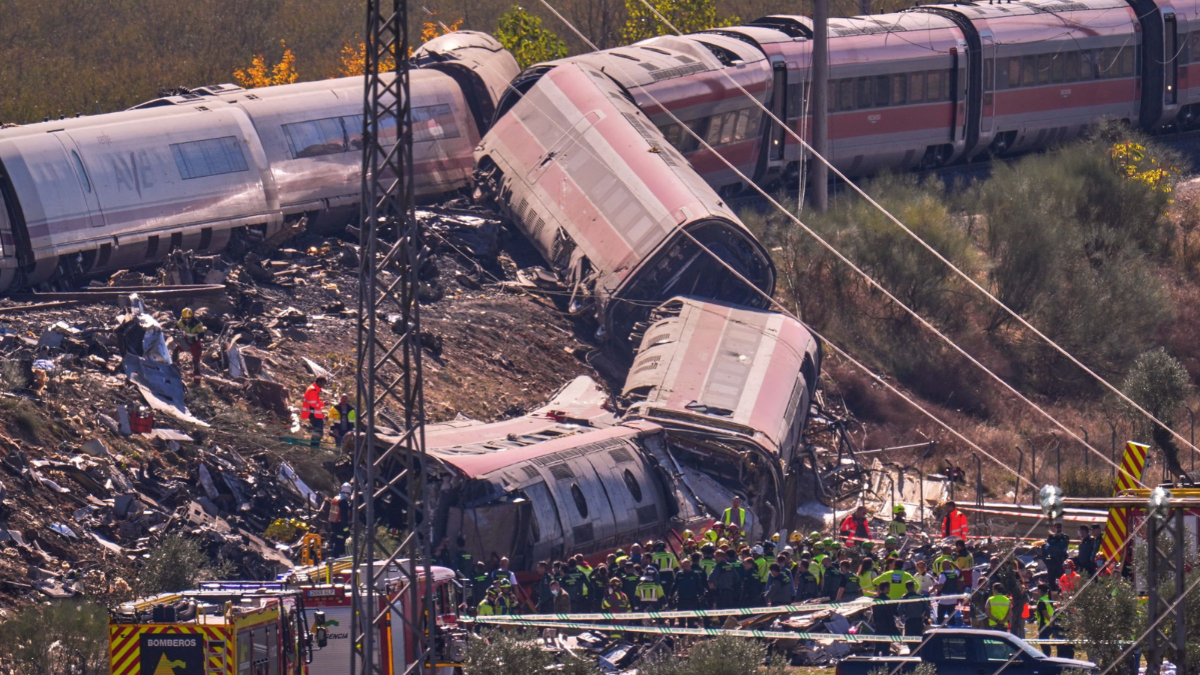
Spain is mourning after a devastating collision between two high-speed trains in central Spain killed at least 69 people on Wednesday, 28 October 2026. The disaster near Urda, in Toledo province, has triggered a major rescue operation, a criminal investigation and renewed concerns about the safety of the country’s railway network. Source: Reuters
The collision occurred on the high-speed line connecting Madrid and Seville when a Renfe train struck a stationary Iryo train. Emergency crews worked through the night, using heavy machinery to reach damaged carriages and search for victims trapped beneath twisted metal.
The tragedy has shocked the nation and intensified scrutiny of railway operations, particularly because another deadly high-speed rail disaster occurred in Spain earlier this year.
What Happened in the Spanish Train Crash?
According to preliminary information released by officials, a failure affecting railway communications and signalling disrupted train movements along part of the Madrid–Seville route.
Several trains were stopped or affected by the technical problem. Authorities said the Renfe train was subsequently authorised to continue travelling despite a red signal, while the Iryo train remained stationary ahead.
The Renfe train then collided with the stationary train at high speed.
Transport Minister Óscar Puente described the decision to allow the train to proceed as inexplicable. Investigators are examining communications, control-centre decisions and the operation of the safety systems to determine precisely how the collision occurred.
The cause has not yet been definitively established, and the investigation must determine whether technical failures, operating procedures or human decisions contributed to the disaster.
Rescue Teams Race to Find Victims
Emergency personnel faced difficult conditions as they searched the wreckage for survivors and recovered victims. Some carriages were severely damaged, complicating efforts to reach people trapped inside.
Authorities reported that dozens of people had died and many others had been injured, with 57 injured passengers still in hospital as of Thursday, according to Reuters. The death toll had risen to 69 by 29 October.
Families gathered at support centres and railway stations, desperately seeking information about relatives whose journeys had ended in tragedy. Hospitals and emergency services worked to assist the injured, while officials coordinated efforts to identify victims and notify their loved ones.
Residents from nearby communities also offered practical assistance, bringing food, water and blankets for survivors and emergency workers.
Prime Minister Pedro Sánchez declared three days of national mourning and promised a thorough investigation. The tragedy has prompted an outpouring of condolences for the victims and their families.
Railway Safety Under Intense Scrutiny
The disaster has raised serious questions about the reliability of Spain’s high-speed rail infrastructure and the systems designed to prevent collisions.
Spain operates one of Europe’s largest high-speed railway networks, which has become an important part of the country’s transport system. However, the latest accident has renewed debate over maintenance spending, signalling technology and the procedures used when technical failures occur.
Railway unions have called for stronger safety measures and greater investment, arguing that the protection of passengers and railway workers must remain a priority.
The October collision is particularly alarming because it follows a deadly crash near Adamuz, in Córdoba province, in January 2026, which killed 46 people. That earlier disaster also prompted questions about railway infrastructure and maintenance.
Although the two accidents occurred under different circumstances, their proximity has increased public pressure for a comprehensive review of railway safety.
Government Faces Pressure for Answers
The government is now under pressure to establish what went wrong and whether the disaster could have been prevented. Opposition politicians have called for an independent review of railway infrastructure, safety systems and previous warnings.
Authorities have begun examining evidence from the trains and railway control operations. Investigators will need to reconstruct the sequence of events, determine why the Renfe train was permitted to continue and establish whether existing safeguards functioned as intended.
Officials have pledged accountability if negligence or safety failures are confirmed.
Spain Mourns as Investigation Continues
As rescue and recovery efforts continue, Spain faces a painful period of mourning and uncertainty. Behind the growing death toll are families grieving loved ones, survivors recovering from serious injuries and communities trying to support those affected.
The investigation will be crucial in establishing the facts and identifying measures needed to prevent another tragedy.
For now, the country’s priority remains supporting victims, helping families find answers and ensuring that the lessons of this devastating collision lead to meaningful improvements in railway safety.