
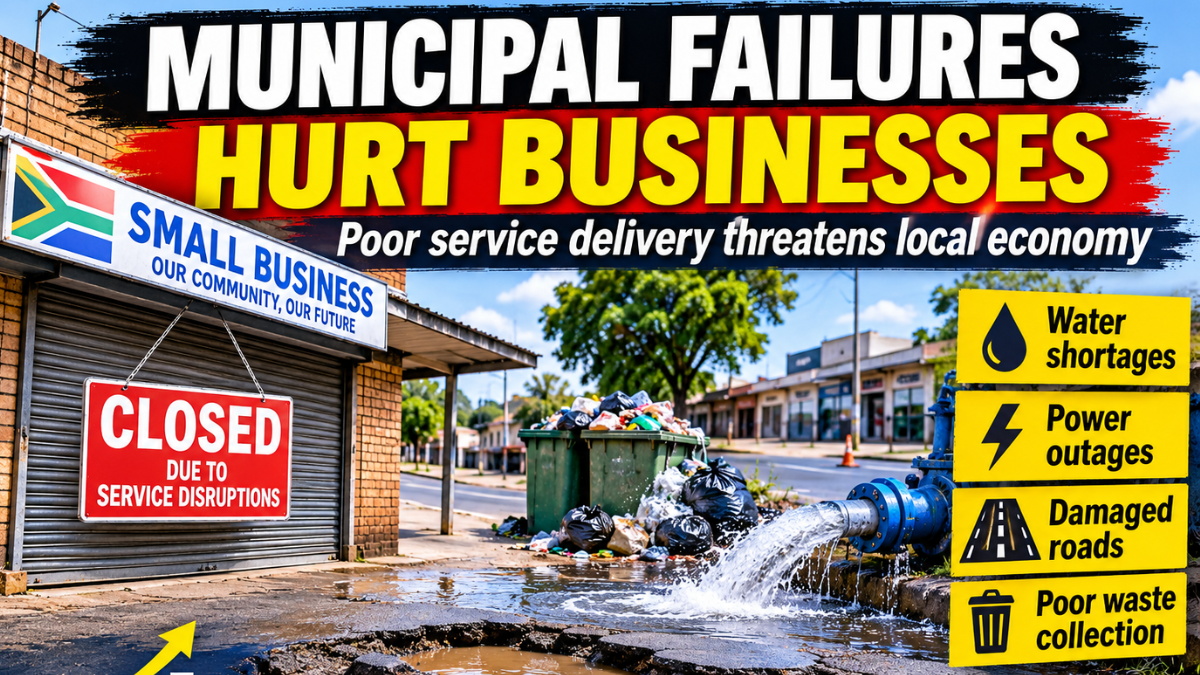
How Poor Municipal Management Affects Local Businesses
Poor municipal management is becoming an increasingly serious concern for businesses across South Africa, with unreliable water supplies, electricity problems, damaged roads and weak service delivery making it difficult for companies to operate successfully.
From small retail shops and restaurants to factories, workshops and agricultural businesses, many enterprises depend on municipalities to provide essential services and maintain the infrastructure that supports economic activity.
When these services fail, businesses often face additional expenses, interruptions and lost income. For small businesses operating with limited financial resources, even a few days of disruption can create serious financial difficulties.
As South Africa continues to battle municipal financial problems and infrastructure deterioration, concerns are growing about the impact on employment, investment and local economic development.
1. Water Shortages Disrupt Daily Business Operations
Reliable water supply is essential for many businesses, particularly restaurants, supermarkets, laundries, salons, car washes and manufacturing companies.
When municipal water systems experience prolonged interruptions, businesses may be forced to reduce operating hours, purchase water privately or temporarily close their doors.
Restaurants, for example, need water for food preparation, cleaning and sanitation. Without a dependable supply, maintaining normal operations becomes difficult.
Some businesses have responded by installing storage tanks, purchasing water containers or arranging private water deliveries. However, these alternatives increase operating expenses and place additional pressure on already limited budgets.
Water shortages can also discourage customers from visiting affected commercial areas.
2. Electricity Problems Increase Operating Costs
Although South Africa has made progress in stabilising national electricity supply, municipal electricity distribution problems remain a concern in several areas.
Businesses may experience localised outages caused by damaged transformers, faulty cables, overloaded networks and delayed infrastructure maintenance.
These disruptions can affect shops, factories, offices and service providers.
Small businesses without backup power may lose sales whenever electricity becomes unavailable. Companies that invest in generators, batteries and solar systems must also absorb the additional installation and maintenance costs.
The problem is particularly challenging for businesses that rely on refrigeration, machinery, computer systems and electronic payment facilities.
3. Poor Roads Affect Customers and Deliveries
Road infrastructure plays an important role in the success of local businesses.
Damaged roads, potholes, broken traffic lights and poor stormwater drainage can make commercial areas difficult to access.
Customers may avoid shopping centres or business districts where roads are poorly maintained. Delivery vehicles may also experience delays, increasing transportation expenses and affecting the movement of goods.
For logistics companies, transport operators and suppliers, deteriorating road conditions can result in higher vehicle maintenance costs and longer delivery times.
National Treasury has warned that declining municipal infrastructure investment increases the risk of service delivery failures and deteriorating infrastructure. This creates challenges for communities and businesses that depend on reliable local services.
4. Municipal Financial Problems Affect Business Confidence
Businesses need confidence that the areas in which they operate will receive reliable municipal services.
However, poor financial management, weak revenue collection and unpaid municipal debts can undermine the ability of local authorities to maintain infrastructure.
According to the Auditor-General’s 2024/25 municipal audit findings, only 35% of municipalities had a good financial position. The report also identified significant water and electricity distribution losses, financial deficits and weaknesses in municipal spending.
These problems can make businesses uncertain about investing in areas where basic services are unreliable.
Economists have also warned that deteriorating municipal services are undermining business confidence, despite progress in other parts of South Africa’s economy.
5. Small Businesses Face Greater Financial Pressure
Large companies may have enough resources to install backup generators, drill boreholes or relocate operations when municipal services become unreliable.
Small businesses often cannot afford these alternatives.
A neighbourhood grocery shop, hair salon or informal food business may depend entirely on affordable electricity and water supplied through municipal networks.
When services are interrupted, owners may continue paying rent, salaries and other operating expenses despite earning little or no income.
These challenges can also make it difficult for new entrepreneurs to establish businesses in areas where infrastructure is unreliable.
6. Poor Sanitation and Waste Collection Drive Customers Away
Uncollected rubbish, blocked drainage systems and overflowing sewage pipes can negatively affect commercial areas.
Restaurants, food outlets and retail businesses depend on clean surroundings to attract customers and maintain acceptable hygiene standards.
When streets become dirty or unpleasant because of poor municipal waste management, customers may choose to shop elsewhere.
Sewage leaks can create additional health and environmental concerns, particularly around food businesses and public spaces.
For businesses operating in tourism and hospitality, poor sanitation can also damage the reputation of an entire destination.
7. Municipal Accountability Is Important for Economic Growth
Municipalities have an important responsibility to create conditions that allow businesses to operate and communities to develop.
This requires proper financial management, infrastructure maintenance, effective planning and transparent procurement processes.
The Auditor-General has highlighted how poor management, delayed projects and weaknesses in procurement continue to affect municipal performance and service delivery.
Improving municipal administration could help reduce unnecessary business expenses, encourage investment and create opportunities for employment.
Local authorities also need to communicate with business owners, respond to service complaints and provide clear information about infrastructure projects and planned maintenance.
What Can Local Businesses Do?
Although businesses cannot solve municipal management problems on their own, they can take practical steps to reduce the impact of service interruptions.
Business owners should consider developing backup plans for water and electricity disruptions, maintaining records of municipal complaints and keeping proof of payments for municipal accounts.
They can also participate in local business forums, chambers of commerce and community meetings to raise concerns about infrastructure and service delivery.
Working together can help business communities communicate their challenges more effectively and demand improvements from municipal authorities.
Final Thoughts
Poor municipal management affects much more than the quality of services delivered to households. It also threatens the survival of local businesses, limits investment and makes it harder to create employment opportunities.
Water shortages, electricity interruptions, damaged roads and poor sanitation increase operating costs and discourage economic activity.
South Africa needs financially responsible municipalities that understand the importance of reliable infrastructure and efficient service delivery.
For local businesses to grow, employ more people and contribute to the economy, they need an environment where essential municipal services can be trusted.
1 thought on “Poor Municipal Management: 7 Ways It Hurts South African Businesses”
Comments are closed.