
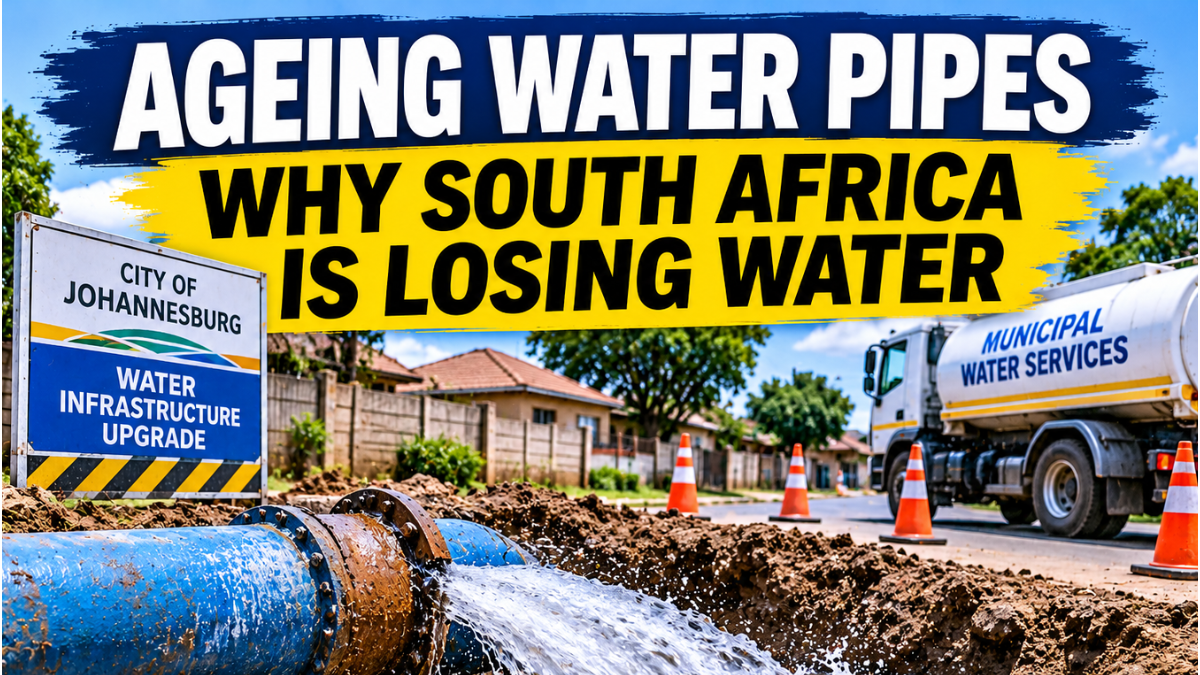
Why Ageing Water Pipes Are Causing Problems Across South Africa
Ageing water pipes are becoming a major challenge for municipalities across South Africa, with frequent bursts, underground leaks and deteriorating infrastructure contributing to water shortages in residential areas.
Communities that once depended on reliable municipal water supplies are increasingly experiencing unexpected interruptions, low water pressure and prolonged repairs. In some neighbourhoods, residents have been forced to rely on water tankers and alternative water sources while municipal teams work to repair damaged pipelines.
The problem has raised concerns about decades of insufficient infrastructure maintenance, growing water demand and the ability of municipalities to provide reliable services.
Although South Africa has significant water infrastructure, getting treated water from reservoirs to household taps remains a major challenge.
1. Ageing Pipes Are Increasing Water Losses
One of the biggest problems associated with old water infrastructure is the amount of treated water lost through leaking and damaged pipelines.
Many municipal water networks were constructed decades ago and require regular maintenance or replacement. Over time, pipes deteriorate because of corrosion, pressure changes, ground movement and repeated exposure to environmental conditions.
When these pipelines develop cracks or break completely, large quantities of treated water can escape before reaching households.
According to the South African Government’s 2025 consolidated local government performance report, national water losses were estimated at approximately 41.7%. The report identified ageing pipelines, inadequate maintenance, vandalism and weak municipal management as contributing factors.
This means that a significant amount of treated water is lost or goes unbilled, placing additional pressure on already stretched municipal resources.
2. Frequent Pipe Bursts Disrupt Household Water Supplies
Residents are often the first to experience the consequences of deteriorating water infrastructure.
A major pipeline burst can affect thousands of households, depending on the location and size of the damaged network.
When a pipe breaks, municipal technicians may need to close valves, isolate sections of the system and drain parts of the network before repairs can begin.
The process can take several hours or longer, particularly when the damage is extensive or replacement materials are unavailable.
In some cases, repairs are followed by additional interruptions as water pressure is gradually restored.
These disruptions affect households, schools, healthcare facilities and businesses that depend on a consistent supply.
3. Water Shortages Are Not Always Caused by Empty Dams
Many South Africans assume that water shortages automatically mean the country’s dams are running out of water.
However, infrastructure problems can also prevent available water from reaching communities.
In February 2026, Water and Sanitation Minister Pemmy Majodina highlighted how ageing infrastructure, leaking pipelines and poor municipal management were undermining reliable water supplies.
The minister explained that treated water was being lost through deteriorating infrastructure instead of reaching households.
This distinction is important because improving water security requires more than building dams. Municipalities must also maintain the pipelines, pumps and reservoirs responsible for distributing water.
4. Municipalities Face Growing Repair and Maintenance Costs
Repairing old water infrastructure can be expensive, particularly when municipalities have allowed small problems to develop into major failures.
A leaking pipe may initially require a relatively straightforward repair. However, when deterioration affects an entire section of a distribution network, replacement can involve excavation, new piping, traffic management and specialised equipment.
Municipalities also face financial challenges that make it difficult to maintain infrastructure consistently.
The Auditor-General’s 2024/25 municipal audit findings reported water distribution losses of approximately R14.73 billion, highlighting the financial consequences of infrastructure neglect and weak management.
When municipalities lose large amounts of treated water, they also lose potential revenue that could have helped fund maintenance and upgrades.
5. Businesses and Communities Feel the Impact
Ageing water pipes affect more than household convenience.
Businesses such as restaurants, laundries, salons, car washes and manufacturing facilities depend on reliable water supplies to operate.
When water interruptions occur, some businesses must purchase alternative supplies, reduce operating hours or temporarily close.
Schools and healthcare facilities also face difficulties maintaining hygiene when water is unavailable.
Low-income households are particularly vulnerable because they may not have storage tanks, boreholes or enough money to purchase bottled water.
In affected communities, residents can spend hours collecting water from tankers instead of attending to work, school and other responsibilities.
6. Why Replacing Old Water Pipes Takes Time
Replacing municipal water pipelines is a complicated process that requires careful planning and substantial funding.
Municipalities must identify the most damaged sections, assess underground infrastructure and determine which areas require urgent intervention.
Projects can also experience delays because of procurement problems, limited technical skills, budget constraints and disagreements involving contractors.
Some municipalities do not have complete records showing the age, location and condition of every pipeline in their networks. This makes it harder to plan replacement programmes effectively.
The government has acknowledged that infrastructure maintenance and municipal capacity are central to addressing South Africa’s water challenges.
7. What Needs to Be Done to Fix the Problem?
Addressing ageing water infrastructure requires a long-term approach rather than relying only on emergency repairs.
Municipalities need to prioritise the replacement of severely deteriorated pipelines and introduce regular inspections to identify leaks before they become major failures.
Other important measures include:
- Increasing budgets for water infrastructure maintenance.
- Improving leak detection and monitoring systems.
- Replacing damaged valves, pumps and ageing pipelines.
- Strengthening municipal engineering departments.
- Addressing illegal connections and infrastructure vandalism.
- Improving water billing and revenue collection.
- Publishing clear updates about planned repairs and infrastructure projects.
Government departments, municipalities and water boards must also work together to ensure that infrastructure projects are completed on time and deliver measurable improvements.
Final Thoughts
Ageing water pipes are contributing to South Africa’s growing water supply challenges, with leaking infrastructure, frequent bursts and expensive repairs affecting communities across the country.
The problem highlights the importance of maintaining existing infrastructure instead of waiting for major failures before taking action.
For residents, reliable water supply means being able to cook, clean, attend school and operate businesses without constantly worrying about the next interruption.
South Africa needs stronger municipal planning, consistent infrastructure investment and accountable leadership to prevent ageing water networks from becoming an even greater threat to water security.