
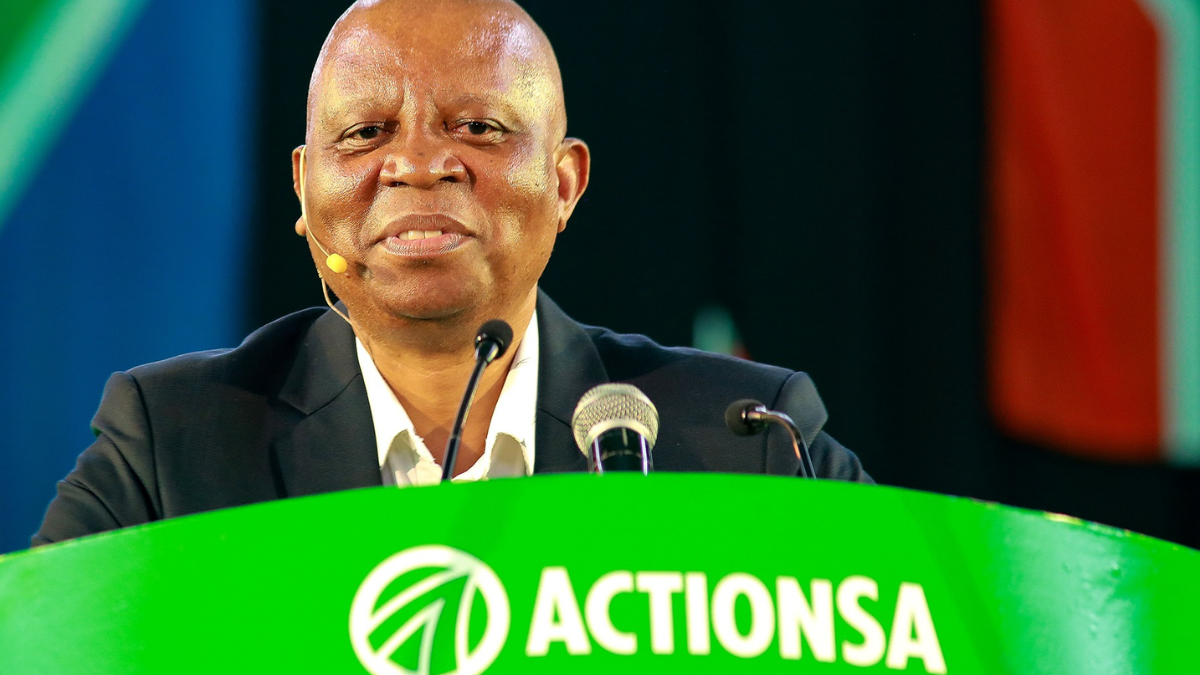
Herman Mashaba’s ActionSA Makes Major Move as Gauteng Coalition Battle Intensifies
South African politics has been thrown into another major twist after ActionSA leader Herman Mashaba made a surprising proposal to the Democratic Alliance (DA) in an effort to break the political deadlock surrounding coalition negotiations in Gauteng.
Mashaba has reportedly offered to withdraw his own ambitions of becoming Johannesburg mayor, but there is a major condition: DA mayoral candidate Helen Zille must also step aside.
The proposal has attracted attention because it could open the door to cooperation between ActionSA and the DA following the 2026 local government elections, which left several major Gauteng municipalities without an outright winner.
The development puts Mashaba at the centre of negotiations that could determine the political future of Johannesburg, Tshwane and Ekurhuleni.
Mashaba’s Surprise Offer to the DA
According to reports, Mashaba sent a letter to DA federal leader Geordin Hill-Lewis on November 7, outlining a possible arrangement between the two parties.
Under the proposal, both Mashaba and Zille would withdraw from the Johannesburg mayoral race. The DA would then nominate another mayoral candidate, with ActionSA supporting that candidate.
In exchange, ActionSA would receive the deputy mayor position in Johannesburg.
The proposal appears to be an attempt to overcome the personal and political tensions between Mashaba and Zille, whose relationship has deteriorated significantly over the years.
Mashaba has repeatedly expressed his unwillingness to work under Zille’s leadership, making her mayoral ambitions a major obstacle to a potential DA-ActionSA agreement.
ActionSA national chairperson Michael Beaumont confirmed that the letter was authentic, although the party expressed disappointment that its contents had become public.
Why Helen Zille Is at the Centre of the Dispute
The disagreement between Mashaba and Zille has become one of the biggest talking points in Gauteng’s coalition negotiations.
Mashaba previously served as Johannesburg mayor under the DA before leaving the party in 2019. His departure followed disagreements with the party leadership.
The relationship between the two political figures has remained strained, with recent public exchanges adding further complications to the coalition discussions.
For Mashaba, the issue appears to be about more than political positions. He has made it clear that ActionSA is prepared to cooperate with the DA but does not want Zille to lead Johannesburg.
This creates a difficult situation for Hill-Lewis, who must balance coalition negotiations with the DA’s internal candidate-selection processes.
ActionSA Also Wants a Strong Position in Tshwane
Mashaba’s proposal is not limited to Johannesburg.
In Tshwane, ActionSA wants its mayoral candidate, Dr Nasiphi Moya, to retain the opportunity to lead the municipality.
The party has reportedly proposed that the DA support Moya’s mayoral candidacy while making concessions regarding other leadership positions.
ActionSA believes Moya’s performance in Tshwane gives the party a strong argument for continuing its leadership of the capital city.
The negotiations could therefore create an arrangement in which the DA takes the lead in Johannesburg while ActionSA retains the mayoral position in Tshwane.
Could the DA Accept Mashaba’s Proposal?
The biggest question is whether the DA will accept the conditions put forward by Mashaba.
The DA emerged as the largest party in Johannesburg, securing approximately 34.79% of the vote, while ActionSA received 16.27%.
Although the DA has a stronger electoral position, it still needs coalition partners to secure control of the municipality.
However, removing Zille from the mayoral race could create internal political difficulties for the DA, particularly after she was selected as its candidate.
The proposal has therefore introduced another complication into already challenging negotiations.
What Happens Next for ActionSA?
Mashaba’s latest move demonstrates how important ActionSA has become in Gauteng’s political landscape.
With no party securing an outright majority in several major municipalities, ActionSA has considerable influence over which political formations eventually govern.
The coming coalition negotiations will determine whether Mashaba can secure an agreement with the DA or whether ActionSA will explore alternative arrangements with other political parties.
For residents, the priority should be stable municipalities, improved service delivery and accountable local government.
One thing is certain: Mashaba’s proposal has added a dramatic new chapter to South Africa’s coalition politics, and the DA’s response could shape the future of Gauteng’s biggest cities.