
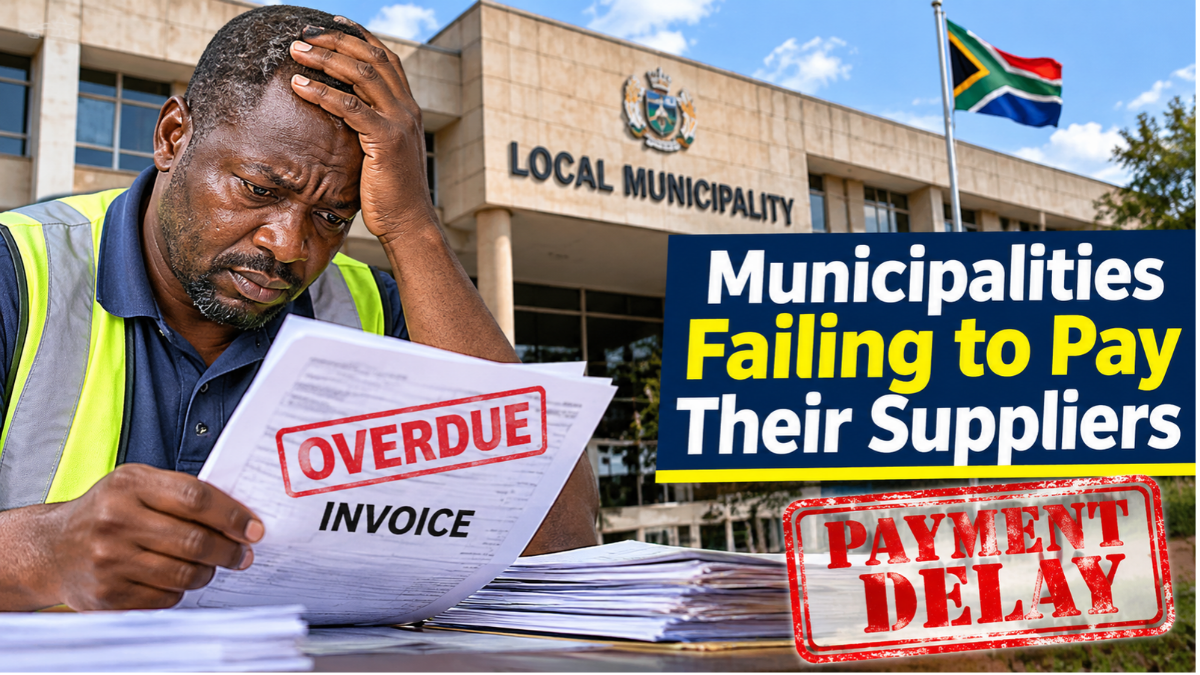
What Happens When Municipalities Fail to Pay Their Suppliers?
Municipalities depend on suppliers to provide essential goods and services that keep communities running. From repairing water pipes and maintaining roads to supplying office equipment, cleaning materials and construction services, local businesses play an important role in supporting municipal operations.
However, when municipalities fail to pay suppliers on time, the consequences can extend far beyond unpaid invoices. Small businesses may struggle to pay employees, contractors may stop providing services, and communities may experience delays in infrastructure maintenance and service delivery.
In South Africa, late municipal payments have become a serious financial management concern. The problem also raises questions about municipal accountability, financial planning and the ability of local businesses to operate sustainably.
1. Small Businesses Experience Serious Cash Flow Problems
Small businesses are particularly vulnerable when municipalities delay payments.
Unlike larger companies, many small suppliers do not have enough financial reserves to operate for several months without receiving money for completed work.
For example, a small construction company that repairs municipal roads may need to pay workers, purchase building materials, cover transport expenses and maintain equipment before receiving payment.
When an invoice remains unpaid, the business may struggle to meet these obligations.
Some suppliers are forced to use personal savings, borrow money or rely on expensive credit facilities to keep their operations running.
This creates financial pressure that can threaten the survival of businesses that depend on government contracts.
2. Workers May Lose Their Jobs
Delayed municipal payments can also affect employees.
When suppliers do not receive money for work already completed, they may struggle to pay salaries, maintain working conditions or hire additional workers.
In some cases, business owners may reduce staff numbers, delay wage payments or retrench employees to control expenses.
This is particularly concerning for small businesses that employ people in construction, maintenance, cleaning, security, transport and other service industries.
Municipal payment delays can therefore affect household incomes and employment opportunities within the same communities that local government is expected to serve.
3. Infrastructure Projects Can Be Delayed
Municipalities rely on contractors and suppliers to maintain and improve public infrastructure.
These companies may be responsible for repairing roads, maintaining electricity networks, fixing water leaks, removing waste and constructing community facilities.
When suppliers are not paid according to agreed terms, they may become reluctant to accept additional work or continue providing services.
Some contractors may slow down operations while waiting for outstanding payments, particularly when they cannot afford to purchase more materials or pay workers.
This can delay important infrastructure projects and affect residents who depend on reliable municipal services.
4. Suppliers May Increase Their Prices
Businesses that repeatedly experience late payments may adjust their prices when bidding for future municipal contracts.
This is because suppliers need to account for the financial risks associated with delayed payments.
They may include additional costs to cover borrowing expenses, administration and the possibility of waiting longer than expected for their money.
As a result, municipalities could end up paying more for goods and services.
In the long term, poor payment practices can reduce competition because smaller businesses may decide that government contracts are too financially risky.
5. Municipalities Can Face Interest Charges and Legal Disputes
Late payments can create additional financial obligations for municipalities.
Depending on the contract and applicable legal arrangements, suppliers may pursue interest on overdue amounts or take steps to recover money owed to them.
Unresolved payment disputes can also damage business relationships and lead to legal proceedings.
This creates additional administrative and financial pressure for municipalities that are already experiencing cash flow problems.
The Auditor-General of South Africa reported that municipalities incurred R19.95 billion in interest and penalties due to late payments between the 2021/22 and 2024/25 financial years.
6. Local Economic Growth Can Be Affected
Small businesses contribute to local economic development by creating employment, purchasing supplies and providing services.
When municipalities delay payments, the financial difficulties experienced by suppliers can spread to other businesses.
For example, a contractor waiting for payment may delay paying a local hardware supplier. That supplier may then struggle to pay its own employees or settle invoices with wholesalers.
This creates a chain reaction that can affect several businesses within a local economy.
Consistent payment practices are therefore important not only for individual suppliers but also for the wider business environment.
7. Why Do Municipalities Fail to Pay Suppliers?
There are several reasons why municipalities may struggle to settle their outstanding invoices.
One major factor is poor revenue collection. Municipalities depend on payments from households, businesses and other customers for services such as water, electricity, sanitation and refuse removal.
When residents and businesses do not pay their accounts, municipalities may experience cash flow shortages.
Other contributing problems include:
- Poor financial planning and budgeting.
- Weak internal financial controls.
- Delays in verifying and approving invoices.
- Ineffective procurement and contract management.
- Inaccurate billing and revenue collection systems.
- Weak financial oversight and accountability.
- Poor management of municipal expenditure.
The Auditor-General’s 2024/25 local government audit report found that 136 municipalities, representing 53% of those assessed, failed to pay creditors on time. Municipalities took an average of 113 days to pay creditors, despite the 30-day requirement.
These findings demonstrate that late payments are not simply administrative delays. They are also connected to broader financial management challenges.
8. What Does the Law Say About Municipal Payments?
South African municipalities are required to manage their finances in accordance with the Municipal Finance Management Act (MFMA).
The legislation places responsibilities on municipal accounting officers to maintain appropriate financial controls and manage municipal obligations.
Municipalities are generally required to pay creditors within 30 days of receiving an invoice or statement, subject to the applicable legal and contractual requirements.
This requirement is intended to promote responsible financial management and ensure that businesses providing goods and services to municipalities are paid within a reasonable period.
Failure to comply can create financial consequences and may raise concerns about the municipality’s financial management practices.
9. How Municipalities Can Improve Supplier Payments
Addressing late payments requires more than promising to settle outstanding invoices. Municipalities need stronger financial systems and better management of their available resources.
Important measures include:
- Improve revenue collection: Municipalities need effective billing systems and consistent collection of outstanding accounts.
- Process invoices faster: Suppliers should receive clear information about invoice submission, verification and approval.
- Strengthen financial controls: Municipalities must monitor outstanding invoices and identify payment delays before they become serious problems.
- Improve budgeting: Financial plans should reflect realistic revenue expectations and existing payment obligations.
- Strengthen accountability: Officials responsible for financial management must be held accountable for failures in payment processes.
- Communicate with suppliers: Municipalities should provide accurate updates when invoices are delayed and explain the steps being taken to resolve problems.
These improvements can help rebuild trust between local government and the businesses that support municipal services.
Conclusion
When municipalities fail to pay their suppliers, the consequences can affect businesses, workers, infrastructure projects and entire communities.
Small companies may struggle to cover expenses, employees may face job insecurity, and important municipal services can experience delays. Continued late payments can also increase municipal costs through interest charges and reduce confidence in government contracts.
South African municipalities need stronger financial management, improved revenue collection and effective payment systems to meet their obligations.
Paying suppliers on time is not simply an administrative responsibility. It is an important part of supporting local businesses, protecting employment and ensuring that communities continue receiving essential services.