
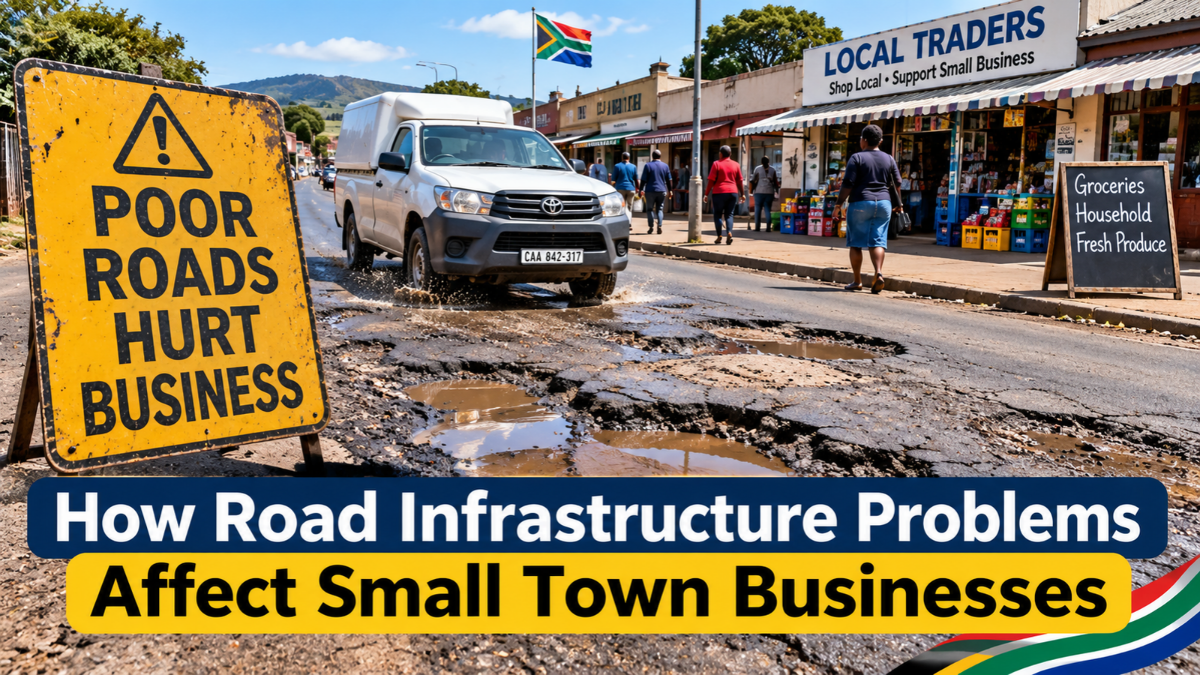
How Poor Roads Affect Small Businesses in South Africa
Road infrastructure plays an important role in the growth and survival of businesses across South Africa. In small towns, roads connect shops, suppliers, customers, farms, industrial areas and surrounding communities. When these roads are poorly maintained, damaged or difficult to access, local businesses can experience serious challenges.
For small business owners, road problems are not simply an inconvenience. Potholes, damaged bridges, poor drainage and unreliable road networks can increase operating costs, delay deliveries and discourage customers from visiting local shops. These challenges can affect business income, employment opportunities and the overall development of small towns.
Understanding how road infrastructure problems affect local businesses is important when considering what communities need to grow economically.
1. Increased Transport and Delivery Costs
Poor roads can increase the cost of transporting goods and providing services. Vehicles travelling over damaged roads may require more frequent repairs, while businesses can spend additional money on tyres, suspension systems, fuel and maintenance.
For small businesses operating with limited budgets, these expenses can reduce profits.
Retailers, wholesalers, restaurants and agricultural businesses are particularly affected when they depend on regular deliveries. Suppliers may also charge more to deliver goods to areas with difficult road conditions.
Over time, higher transport costs can force business owners to increase their prices, making products and services more expensive for local customers.
2. Delayed Deliveries and Stock Shortages
Businesses depend on reliable deliveries to keep their operations running. When roads are damaged or difficult to navigate, delivery vehicles may take longer to reach their destinations.
These delays can create problems for businesses that rely on fresh produce, building materials, groceries and other essential supplies.
For example, a small grocery store may struggle to maintain enough stock if suppliers cannot deliver products on schedule. Restaurants may experience shortages of ingredients, while construction businesses may face delays when materials arrive late.
Repeated delivery disruptions can affect customer satisfaction and make it harder for small businesses to compete.
3. Fewer Customers Visiting Local Businesses
Road conditions can influence where people choose to shop. Customers may avoid business areas that are difficult to reach because of potholes, flooding, poor road surfaces or limited parking access.
This can be particularly challenging for small-town businesses that depend on customers from surrounding villages and rural communities.
When customers find it difficult or expensive to reach local shops, they may choose businesses in larger towns or shopping centres with better road access.
As a result, small retailers, restaurants, service providers and other local businesses may experience reduced sales.
4. Negative Effects on Tourism
Tourism provides income for many small towns through accommodation, restaurants, guest houses, local attractions and informal businesses.
However, poor road infrastructure can discourage visitors from travelling to certain destinations.
Tourists may be concerned about vehicle damage, travel delays and difficult access to attractions. Businesses that depend on weekend visitors, holidaymakers and passing travellers can lose potential income when roads are poorly maintained.
Improving roads leading to tourist destinations can help make small towns more accessible and encourage visitors to spend money in local communities.
5. Challenges for Agricultural Businesses
Agriculture is an important source of income and employment in many rural areas. Farmers often depend on roads to transport crops, livestock, equipment and supplies.
Poor roads can make it difficult to move agricultural products to markets, processing facilities and distribution centres.
For farmers transporting perishable goods, delays can result in damaged produce and financial losses. Small agricultural suppliers may also struggle to reach customers and larger buyers when transport routes are unreliable.
Better rural roads can help farmers access markets more efficiently and support the businesses that depend on agricultural activity.
6. Reduced Opportunities for Business Growth
Small businesses need reliable infrastructure to expand their operations. Business owners may want to attract new customers, employ additional workers or reach markets in neighbouring towns.
However, poor road conditions can make expansion more difficult.
Companies may hesitate to establish operations in areas where transporting goods and employees is expensive or unreliable. Investors may also consider road access when deciding where to develop new projects.
This means road infrastructure problems can affect not only existing businesses but also the ability of small towns to attract new economic activity.
7. Impact on Employment Opportunities
When businesses experience higher operating costs, delayed deliveries and declining sales, their ability to employ workers may be affected.
Some business owners may postpone hiring, reduce working hours or struggle to maintain existing positions.
Small businesses are important sources of employment in many communities. They provide opportunities for shop assistants, drivers, cleaners, restaurant workers, mechanics, construction workers and other employees.
Improving road infrastructure can support business activity and create better conditions for local employment.
8. What Can Be Done to Improve the Situation?
Addressing road infrastructure problems requires cooperation between local municipalities, provincial authorities, national government and communities.
Important improvements include:
- Regular road maintenance: Potholes and damaged road surfaces should be repaired before they become major hazards.
- Better drainage systems: Roads need effective drainage to reduce damage caused by heavy rainfall and flooding.
- Improved rural connections: Communities and businesses outside major towns need dependable access to economic centres.
- Clear maintenance planning: Authorities should identify high-priority routes and communicate planned repair work.
- Community reporting: Residents and business owners should have accessible ways to report dangerous road conditions.
- Long-term infrastructure investment: Road improvements should include proper planning, construction standards and ongoing maintenance.
Small businesses can also work together through local business associations to communicate infrastructure concerns and explain how road conditions affect their operations.
Conclusion
Road infrastructure problems can create significant challenges for small-town businesses in South Africa. Poor roads increase transport expenses, delay deliveries, discourage customers and make it harder for companies to expand.
These problems can also affect tourism, agriculture and local employment, limiting the economic opportunities available to communities.
Investing in road maintenance and improving connections between towns and surrounding areas can help create a better environment for small businesses to operate and grow. Reliable roads are not only important for transport; they are an essential part of building stronger local economies.
1 thought on “How Road Infrastructure Problems Affect Small Town Businesses”
Comments are closed.