
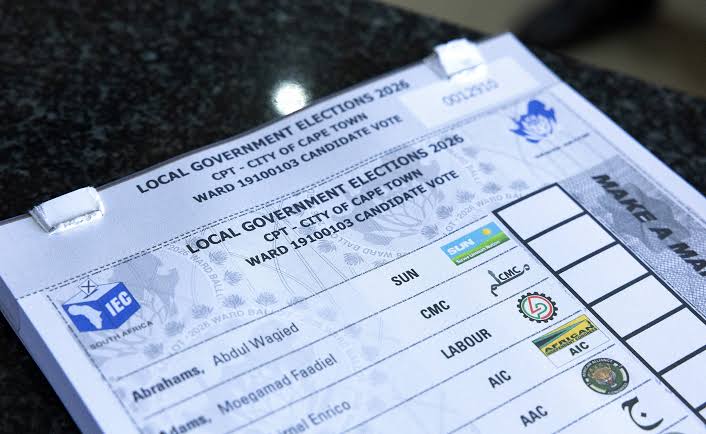
The first day of special voting for South Africa’s 2026 municipal elections was disrupted in Cape Town after ballot papers failed to reach 217 voting stations before the scheduled 08:00 opening time on Monday, 2 November.
The delays affected voters across the Cape Metro, leaving many people waiting for election materials before they could exercise their democratic right.
The Electoral Commission of South Africa (IEC) apologised for the inconvenience, explaining that unforeseen printing and delivery challenges had affected the distribution of special voting ballot papers.
Western Cape Provincial Electoral Officer Michael Hendrickse confirmed that the affected stations would open as soon as their ballot papers arrived.
217 voting stations affected by delays
The disruption was widespread across the Cape Metro, affecting 217 voting districts in 33 wards.
Some voters arrived early at their registered voting stations expecting to cast their ballots before going to work or attending to other responsibilities. Instead, they encountered delays because the necessary ballot papers had not yet been delivered.
The situation was particularly frustrating for elderly voters and people with disabilities, many of whom had arranged transport or assistance to participate in special voting.
Hendrickse apologised to affected residents and said the commission was working with its printing contractor to resolve the problem.
He also assured voters that security measures were in place to protect ballot papers during transportation and delivery.
According to the IEC, the disruption was limited to the Cape Metro. Voting stations in other parts of the Western Cape were reported to be operating normally.
Why were the ballot papers delayed?
The delays came after the IEC faced additional printing requirements following a Constitutional Court ruling in October.
The ruling allowed additional political party candidates to be included in the November municipal election process. This meant that ballot papers already printed for certain areas had to be replaced.
IEC Deputy Chief Electoral Officer for Electoral Operations Masego Sheburi explained that approximately 33 million ballot papers had to be reprinted.
Although the printing process was completed, the commission experienced challenges with packaging and preparing the ballot papers for distribution.
The materials had to include the required security features, correct numbering and proper assembly into booklets before being transported to voting stations.
Cape Town’s ballot papers were among the final batches to complete the process, contributing to the late deliveries.
IEC extends voting arrangements to accommodate affected residents
The IEC worked to ensure that eligible voters who could not cast their ballots at the scheduled opening time were still given an opportunity to participate.
According to subsequent reports, the outstanding ballot papers were delivered to affected Cape Metro voting stations by the end of Monday.
Voting hours in the metro were extended to 18:00 to accommodate voters affected by the disruption.
The commission also confirmed that special voting would continue on Tuesday, 3 November, giving approved voters another opportunity to cast their ballots.
Nationwide, approximately 2.65 million voters had been approved for special voting. This arrangement accommodates registered voters who cannot reach their voting stations because of physical infirmity or disability, as well as those who will be unavailable on the main election day.
Main election day approaches
The ballot delivery problems have raised questions about the IEC’s logistical preparations and the importance of ensuring that voting materials reach every station on time.
With the main municipal election scheduled for Wednesday, 4 November, attention has shifted to whether the commission can deliver a smooth voting process across the country.
The IEC has maintained that every eligible voter who successfully applied for a special vote must receive an opportunity to participate.
For affected Cape Town residents, the delays created an unexpected obstacle during an important democratic process. However, the commission’s subsequent arrangements were intended to ensure that the initial disruption did not prevent approved voters from making their voices heard.
The focus now remains on the second day of special voting and preparations for the main election.
Live updates: Cape Town special voting delays
3 November 2026 – Second day of special voting begins
Special voting continues across South Africa. The IEC expects voting stations to open at 08:00, with outstanding ballot delivery problems from Monday reportedly resolved.
2 November 2026 – Voting hours extended in Cape Metro
The IEC extends voting hours in affected Cape Town areas until 18:00 to accommodate voters who experienced delays. Outstanding ballot papers are delivered to affected stations by the end of the day.
2 November 2026 – 217 stations fail to open on time
Late ballot deliveries prevent 217 Cape Metro voting stations from opening at the scheduled 08:00 start. The IEC apologises and says stations will open as ballot papers arrive.
October 2026 – Additional ballot printing required
Following a Constitutional Court ruling affecting candidate lists, the IEC has to reprint approximately 33 million ballot papers, placing additional pressure on election preparations.