
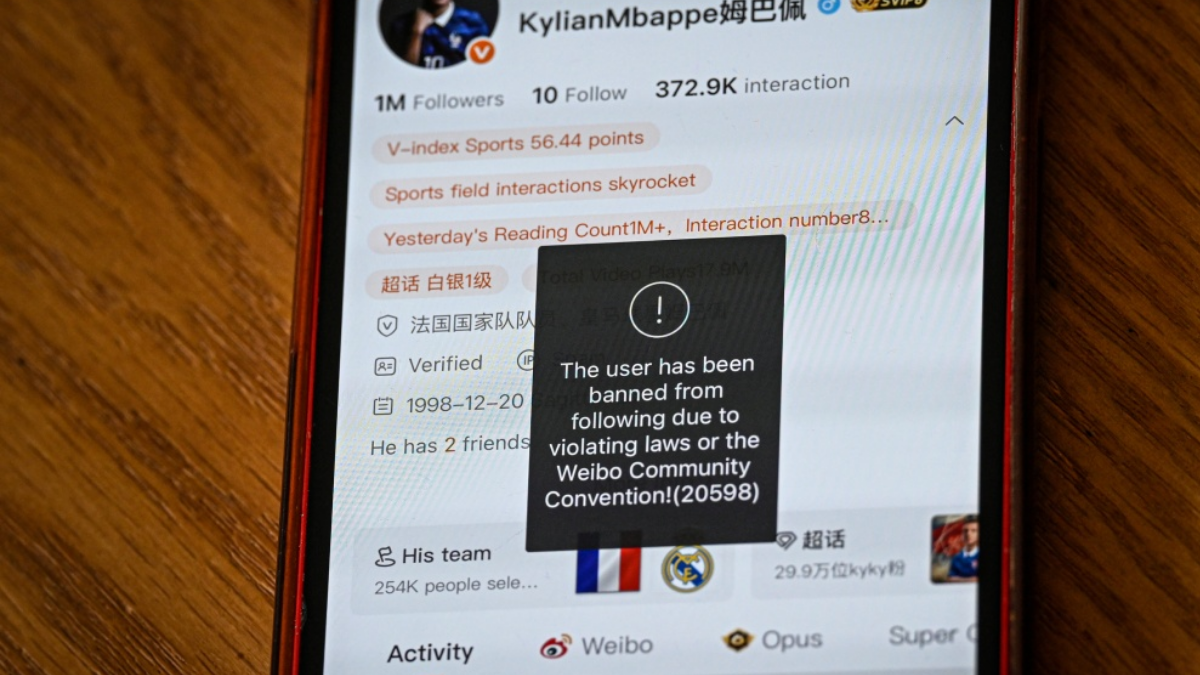
Kylian Mbappé is one of the biggest names in world football, but the Real Madrid forward has found himself at the centre of an international controversy that extends far beyond the pitch. A video discussing an internet meme has triggered a backlash in China, cost the French superstar several commercial partnerships and placed Spanish football’s relationship with a major market under pressure.
The controversy has also raised questions about celebrity responsibility, cultural sensitivity and the risks global athletes face when their private jokes reach millions of people online. Mbappé has apologised for his remarks, while Real Madrid and Spain’s La Liga have also issued apologies. However, the incident demonstrates how quickly an online moment can become a serious commercial problem for a global sports figure.
What Did Mbappé Say That Caused the Controversy?
The controversy began when a clip from an interview with the French-language programme The Bridge circulated online. In the video, Mbappé discussed memes featuring his face digitally placed onto images of historical political leaders. One particular image appeared to show Mbappé’s face superimposed onto the body of Mao Zedong, the former Chinese leader who founded the People’s Republic of China in 1949.
While discussing the image, Mbappé referred to the person depicted as a Chinese dictator. Although he did not explicitly name Mao in the reported remark, the image and his description made the apparent reference clear. The clip was shared widely on social media, attracting attention well beyond football audiences. The situation escalated because Mao remains an exceptionally sensitive historical figure in China.
While his legacy is complex and includes both his role in the country’s modern history and the catastrophic consequences of policies implemented under his leadership, jokes portraying him disrespectfully can provoke strong reactions. What might have appeared to some viewers as an informal conversation about internet humour was interpreted by many others as offensive.
Why Did China React So Strongly?
Understanding the reaction requires looking beyond football. Mao Zedong remains closely associated with the founding of modern China and is a central figure in the country’s official historical narrative. His image and legacy carry political and cultural significance that differs from how many people outside China understand him.
As a result, a joke involving Mao can carry implications that go beyond the humour intended by the person making it. Mbappé’s global profile added another dimension. International stars often build commercial relationships with brands that depend on their popularity and public image in particular markets. For companies operating in China, maintaining trust with consumers is commercially important.
When a celebrity endorsement becomes associated with a controversial remark, companies may decide that continuing the partnership creates more risk than benefit. The reaction was therefore not limited to football supporters expressing their opinions online. It also developed into a commercial dispute involving brands, broadcasters and one of the world’s most recognizable players.
Chinese Brands End Partnerships With Mbappé
The financial consequences became apparent when major Chinese companies announced that they were ending their partnerships with the French forward. Dongpeng Beverage Group, a Chinese drinks company that had featured Mbappé in advertising campaigns, announced that it was terminating its cooperation with him. Mengniu, a major Chinese dairy producer, also announced that it was ending its partnership with the footballer. Milkground was among the other companies reported to have ended its cooperation with him.
These decisions demonstrated that the controversy had moved beyond online criticism and begun affecting Mbappé’s commercial relationships. The precise financial value of the terminated agreements has not been publicly established in the reporting cited here. It would therefore be misleading to claim a specific amount of money that Mbappé has lost.
Nevertheless, the situation represents a significant challenge for an athlete whose public image is an important part of his commercial value. For sponsors, celebrity partnerships are intended to connect products with positive associations such as sporting excellence, popularity and trust. Controversies can disrupt that relationship almost immediately.
Mbappé Issues an Apology
Following the backlash, Mbappé publicly apologised for his remarks.
He described his comment as ill-judged and acknowledged that it had hurt people in China and Chinese communities around the world. He also expressed respect for the Chinese people and their history.
His apology was published in French, Chinese and English, reflecting the international nature of the controversy.
China’s Foreign Ministry subsequently said that it took his apology seriously.
However, an apology does not automatically restore commercial relationships or remove public criticism. Brands must decide whether they are willing to resume partnerships, while audiences may take different positions on whether the apology adequately addresses the offence caused.
The incident illustrates the difficult balance between explaining one’s intentions and accepting responsibility for how words are received by others.
Real Madrid and La Liga Become Involved
The controversy also created problems for Real Madrid, the club Mbappé represents, and La Liga, Spain’s top professional football competition.
Real Madrid issued an apology to the Chinese people, expressing respect for China’s history, culture and citizens. The club also referred to Mbappé’s own apology.
La Liga similarly expressed regret over the offence caused by the player’s comments.
The consequences extended to football broadcasting. China’s state broadcaster suspended broadcasts of La Liga matches amid the dispute, creating a potential commercial problem for Spanish football in the country.
This matters because major football competitions depend on international broadcasting, sponsorships and relationships with audiences across different markets.
The dispute demonstrates that a controversy involving one player can create difficulties for organisations connected to that individual, even when the remarks were made during an interview rather than an official club event.
What Does This Mean for Mbappé’s Career?
Mbappé remains an elite footballer whose sporting achievements and commercial appeal have made him one of the most recognisable athletes of his generation.
However, his experience highlights an important reality of modern football: success on the pitch does not eliminate the responsibilities that come with international fame.
Athletes are increasingly expected to understand how their public statements may be interpreted across different cultures. Social media makes this especially challenging because comments made in a casual setting can quickly circulate globally, often without the original context.
For Mbappé, the immediate challenge is to move beyond the controversy while maintaining trust among supporters, sponsors and football organisations.
Whether the terminated partnerships can be restored remains uncertain. Any assessment of the long-term damage should therefore distinguish between confirmed developments and speculation.
The Bigger Lesson for Global Football Stars
The Mbappé controversy is a reminder that modern football is not only about goals, trophies and individual awards. It is also an international business in which reputation, cultural awareness and commercial relationships matter.
A joke intended for an informal conversation can have consequences when it involves a subject that carries deep historical meaning for another audience.
For clubs, sponsors and athletes, the incident highlights the importance of understanding the markets in which they operate and responding carefully when controversy emerges.
Mbappé has apologised, and Real Madrid and La Liga have followed with their own apologies. Whether those steps will be enough to repair the damage remains to be seen.
For now, the episode stands as a striking example of how quickly a viral moment can develop into a crisis involving football, business and international cultural sensitivities.
Sources: Associated Press, Agence France-Presse, Al Jazeera and ABC News reporting published on 27–29 October 2026.