
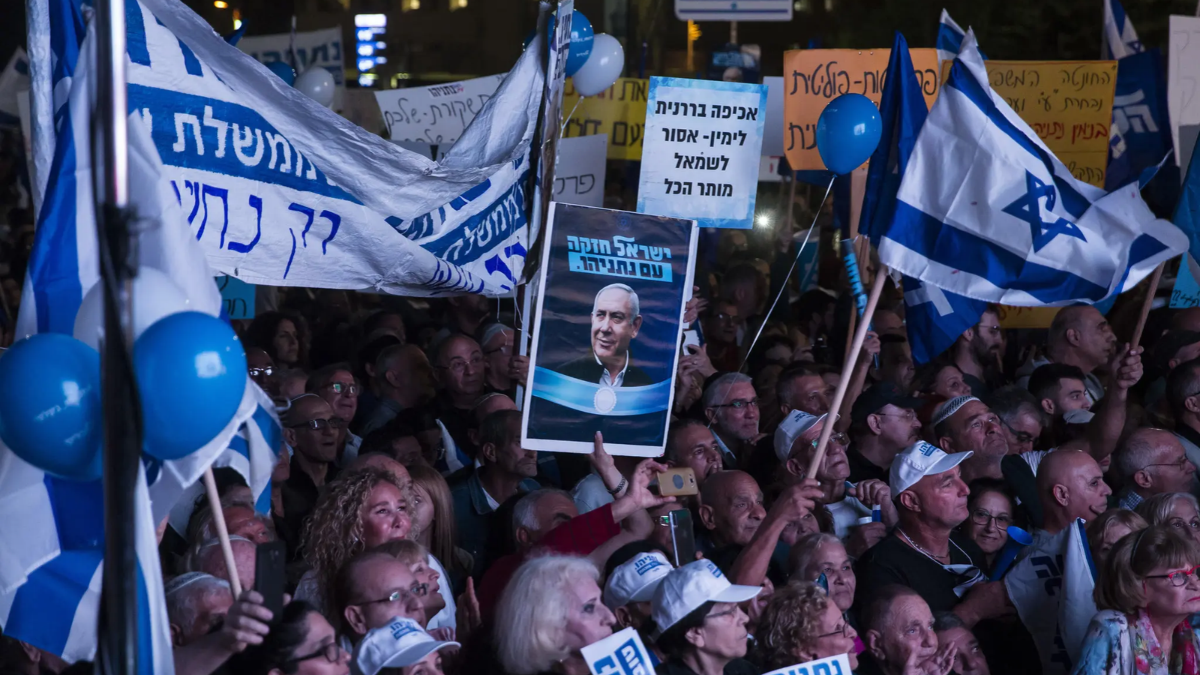
Israel Election Deadlock Leaves Country Facing Political Uncertainty
Israel is facing renewed political uncertainty after its 27 October 2026 parliamentary election failed to produce a clear winner, leaving Prime Minister Benjamin Netanyahu and opposition leader Gadi Eisenkot struggling to secure the support needed to form the next government. With neither major political bloc reaching the 61 seats required for a parliamentary majority, the country is entering a potentially prolonged period of negotiations. Source: Reuters
The inconclusive result has raised questions about Israel’s political future, the direction of its security policies and the ability of rival parties to overcome deep ideological divisions.
Netanyahu Faces a Difficult Path to Power
Netanyahu’s Likud-led coalition emerged from the election without a clear parliamentary majority. Initial results reported on 28 October indicated that his bloc was on course for approximately 53 seats in the 120-member Knesset, while the opposition bloc led by Eisenkot was projected to secure around 48 seats. Arab parties accounted for a further 19 seats, according to figures reported by The Times of Israel. These numbers reflected the count at that stage rather than a final, settled government arrangement. Source: The Times of Israel
The results represent a setback for Netanyahu, Israel’s longest-serving prime minister, who has sought to maintain a governing alliance with right-wing, ultranationalist and religious parties.
However, falling short of a majority does not automatically remove him from office. Netanyahu can remain caretaker prime minister while political leaders negotiate possible coalition agreements.
The opposition also faces significant obstacles. Although its parties collectively challenge Netanyahu’s leadership, differences over policy and cooperation with Arab parties could prevent them from forming a unified government.
Coalition Negotiations Could Decide Israel’s Future
Israel’s parliamentary system requires a government to command the support of at least 61 of the Knesset’s 120 members.
President Isaac Herzog is expected to consult party representatives and determine which candidate has the strongest prospects of forming a government. The designated candidate must then negotiate with other parties to secure sufficient parliamentary backing.
One possible outcome is a unity government involving parties from rival political camps. Such an arrangement could offer a route out of the deadlock, but it would require major compromises over leadership, security policy and the participation of existing coalition partners.
Another possibility is an opposition-led government that depends on support from Arab parties. That option remains politically contentious because some opposition factions have resisted relying on those parties to secure a parliamentary majority.
If successive attempts to establish a government fail, Israel could ultimately face another election, extending the period of uncertainty.
Security and War Remain Central Election Issues
The election took place against the backdrop of the wars and regional tensions that followed the Hamas-led attacks of 7 October 2023. Security, the handling of the attacks, military operations and relations with neighbouring countries remained central issues for voters.
Netanyahu has defended his security record and argued that continued leadership is necessary to address threats facing Israel. His critics, meanwhile, have questioned his government’s handling of the October 2023 attacks and its wider approach to the subsequent conflicts.
Eisenkot, a former military chief and leader of the Yashar party, has presented himself as an alternative to Netanyahu while maintaining a strong emphasis on national security.
These competing positions underline the difficulty of finding common ground between parties that disagree not only over leadership but also over the country’s future direction.
High Voter Turnout Highlights the Stakes
Reported voter turnout reached 77.7%, the highest level in more than two decades, according to election coverage by Reuters. The strong participation highlighted the significance of the vote for a country dealing with security concerns, social divisions and debates about government accountability. Source: Reuters
The result also demonstrates that a highly engaged electorate does not necessarily translate into a clear parliamentary mandate. Israel’s fragmented political landscape means smaller parties can play a decisive role in determining which leader ultimately forms a government.
What Happens Next?
Israel’s immediate challenge is to establish a government capable of commanding parliamentary support and providing political stability. The coming negotiations will test whether rival parties can compromise or whether their disagreements will prolong the stalemate.
For Netanyahu, the priority is to assemble a viable coalition or explore alternative arrangements that could keep him in office. For Eisenkot and the opposition, the challenge is to turn opposition to Netanyahu into a workable governing majority.
Until a new government is formed, uncertainty will remain over Israel’s domestic priorities, security decisions and political direction.
The election has delivered no straightforward resolution. Instead, it has placed Israel at another critical political crossroads, with coalition negotiations set to determine what comes next.