
Springboks Shock: 5 Painful Lessons from France’s 21–19 Victory After Jasper Wiese’s Red Card
France beat the Springboks 21–19 in Paris after Jasper Wiese’s red card. Read five major lessons from South Africa’s Nations Championship defeat.
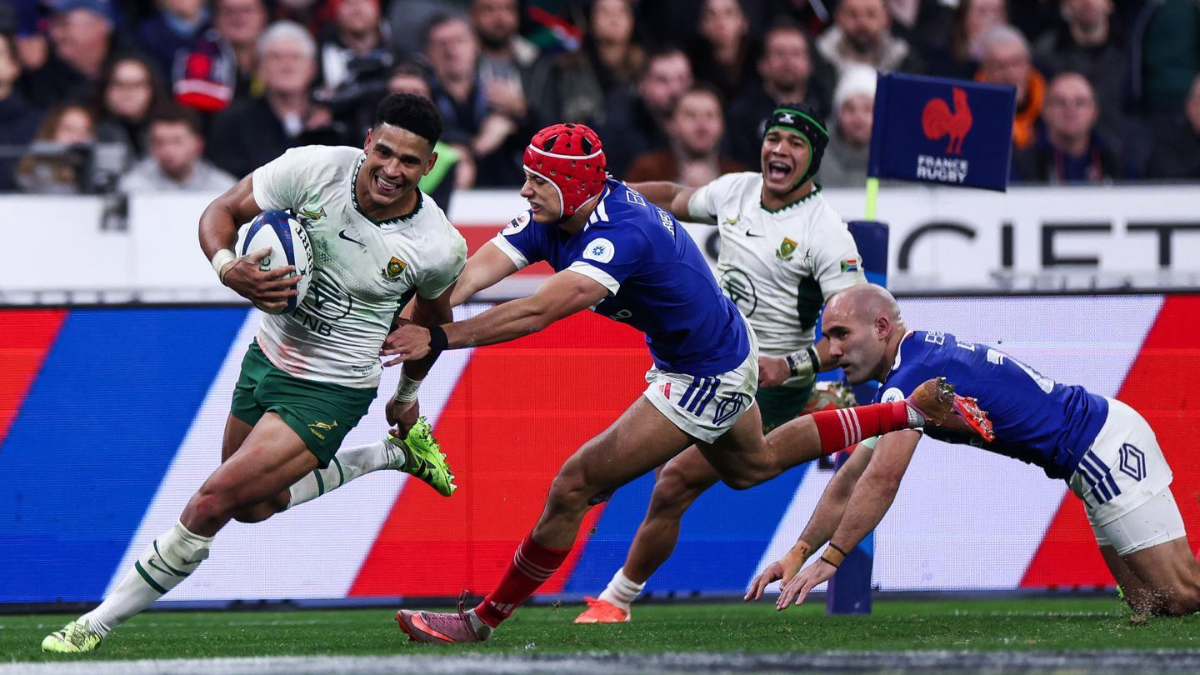
South African rugby supporters were left frustrated after the Springboks suffered a dramatic 21–19 defeat to France at the Stade de France on Friday, 13 November 2026. The world champions produced a determined second-half comeback, but a costly first-half performance and Jasper Wiese’s red card ultimately helped France secure a famous victory.
France led 21–7 at half-time after scoring three tries. South Africa fought back with two second-half tries, despite playing with 14 men for much of the contest. The hosts failed to score after the break but held on to win by just two points.
The result ended France’s wait for a home victory over the Springboks in Paris that had lasted since 2005. It was also South Africa’s first defeat in the 2026 Nations Championship campaign. Here are five major talking points from the Paris thriller. SA Rugby+2
1. France punished the Springboks in the first half
The opening 40 minutes proved decisive. France started aggressively, using their attacking speed and territorial pressure to put the Springboks under serious pressure. Aaron Grandidier-Nkanang scored the opening try, before Theo Attissogbe added another.
South Africa responded through hooker Jan-Hendrik Wessels, whose try gave the visitors an opportunity to settle into the contest. However, France struck again through Louis Bielle-Biarrey, extending the home side’s advantage to 21–7.
The Springboks struggled to control the early exchanges, and their discipline became a major concern. Lock Lood de Jager was sent to the sin-bin for a dangerous tackle, giving France an opportunity to exploit their numerical advantage. The hosts made the most of those opportunities and went into the dressing room with a 14-point lead.
2. Jasper Wiese’s red card made the comeback harder
One of the match’s biggest turning points came early in the second half when Jasper Wiese was sent off. The Springbok number eight initially received a yellow card following a dangerous clear-out on France’s Kalvin Gourgues. After a bunker review, the yellow card was upgraded to a 20-minute red card. The decision meant South Africa had to continue with 14 players for the remainder of the match.
Losing a forward in a physically demanding Test against France was a major setback. The Springboks had to reorganise their defensive structure while attempting to chase a significant points deficit. The incident also placed additional pressure on the remaining forwards, who needed to maintain their physical presence at the breakdown and in the set pieces. Although South Africa continued fighting, the dismissal made an already difficult task considerably harder. Reuters+2
3. Cobus Reinach brought the Springboks back into the contest
South Africa refused to surrender despite playing with 14 men. Cobus Reinach made an immediate impact after coming off the bench, scoring a try that reduced France’s advantage. Sacha Feinberg-Mngomezulu added the conversion, bringing the score to 21–14. The try changed the atmosphere of the match. France, who had controlled the first half, suddenly faced a much more dangerous South African side.
Reinach’s speed and attacking awareness provided an important spark, while the Springboks began finding opportunities to put pressure on the French defensive line. The comeback demonstrated the importance of South Africa’s bench, with replacements helping the team regain momentum when the match appeared to be slipping away.
4. Malcolm Marx brought South Africa within two points
The Springboks continued applying pressure as the second half progressed. Their persistence eventually produced another try through replacement hooker Malcolm Marx, who crossed the line after South Africa used their powerful driving maul. The score moved to 21–19, leaving the visitors just two points behind.
A successful conversion would have levelled the match, but the opportunity was missed. France had not added any points in the second half, yet their first-half advantage remained just enough to protect their lead. South Africa continued searching for a winning opportunity during the closing stages, but France defended desperately to preserve the result.
5. France ended a 21-year wait in Paris
The victory was particularly important for French rugby. France had not beaten South Africa at the Stade de France since 2005, making the result a significant achievement for head coach Fabien Galthié and his players. Antoine Dupont also played an important role in France’s tactical approach. He was selected at fly-half, with Maxime Lucu operating in the half-back combination.
The tactical arrangement helped France create attacking opportunities during the opening period and put the Springboks under pressure. France’s ability to defend their advantage in the second half was equally important. Although South Africa came close to completing an extraordinary comeback, the home side remained organised when the pressure increased.
The result showed that France can compete with the world’s strongest rugby teams when their attacking execution and defensive discipline come together. Reuters+2
What the defeat means for the Springboks
The defeat is a setback for South Africa’s Nations Championship ambitions. The Springboks had entered the match unbeaten in the competition, but their first loss means they must respond strongly in their remaining fixtures. They will next face Ireland at the Aviva Stadium in Dublin on Saturday, 21 November 2026. The match is scheduled to kick off at 18:40 South African time.
Rassie Erasmus and his coaching staff will have several areas to examine, particularly discipline, defensive organisation and the team’s slow start against France. The Springboks showed considerable character by scoring twice in the second half with 14 players. However, their comeback also highlighted how expensive a poor opening period can become at international level.
The missed conversion after Marx’s try will attract attention, but the result cannot be blamed on one kick alone. France had already built a 21-point advantage through effective attacking rugby. South Africa must now put the disappointment behind them and prepare for another difficult Test against an Irish side playing at home.
A warning ahead of the Ireland Test
The 21–19 defeat will hurt because the Springboks came so close to rescuing a match that appeared lost at half-time. Their second-half effort demonstrated the team’s fighting spirit, but the opening 40 minutes and Wiese’s dismissal proved too costly.
France deserve credit for taking their opportunities and surviving the late pressure. For South Africa, the message is clear: discipline and concentration must improve if they want to remain competitive in the Nations Championship. The next meeting with Ireland will provide an immediate opportunity to respond.