
GBVF Funding Boost: R5.1 Billion Package Promises 3,552 Social Workers and Stronger Survivor Support
South Africa commits R5.1 billion to fight GBVF, including 3,552 social workers, more sexual offences courts and expanded survivor support.
South Africa has announced a major funding commitment aimed at strengthening its response to gender-based violence and femicide (GBVF), with government welcoming a R5.1 billion package designed to improve prevention, investigations, survivor support and access to justice.
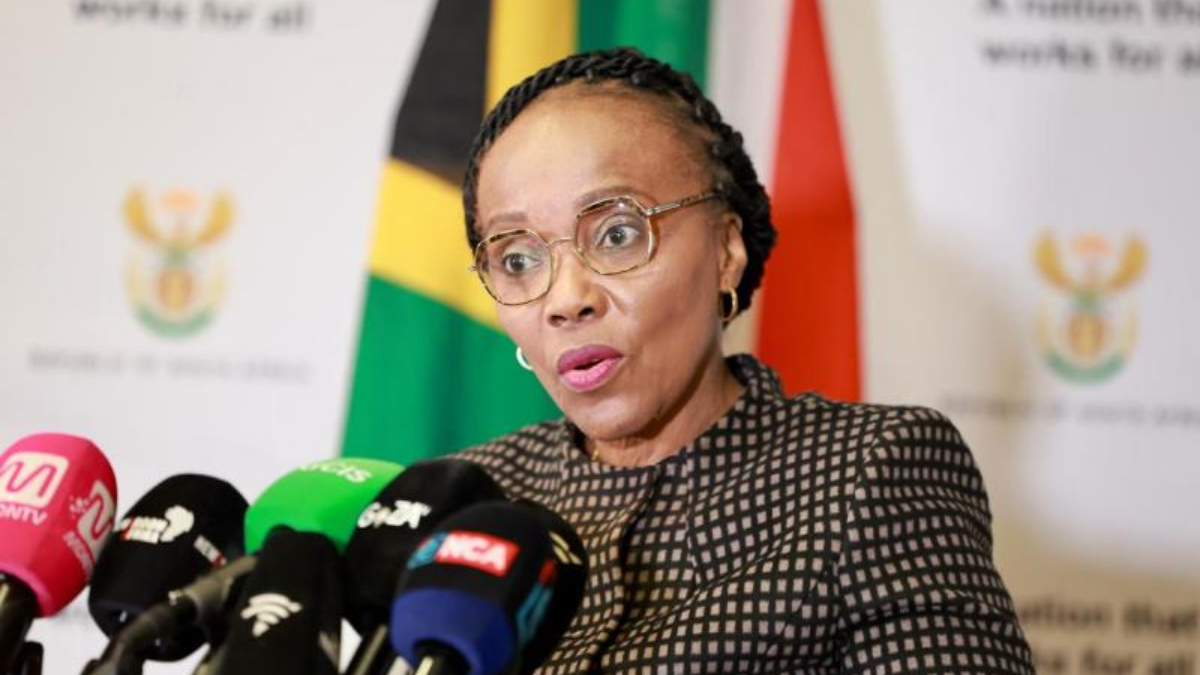
Minister in the Presidency for Women, Youth and Persons with Disabilities Sindisiwe Chikunga welcomed the funding commitments on Friday, 13 November 2026, during a strategic engagement with the Commission for Gender Equality.
The announcement comes as South Africa continues to face serious challenges in protecting women and children, supporting survivors and ensuring that perpetrators are brought before the courts. The biggest portion of the package is R3.8 billion allocated over the medium term to recruit 3,552 social workers across the provinces.
The funding also includes improvements to forensic and investigative capacity, more sexual offences courts and additional Thuthuzela Care Centres. However, the announcement raises an important question: will the money translate into better services for survivors who need protection and justice? SAnews+1
1. R5.1 billion GBVF funding package announced
The R5.1 billion commitment is intended to strengthen several parts of South Africa’s response to gender-based violence and femicide. According to government, the package includes funding for social workers, forensic investigations, sexual offences courts, Thuthuzela Care Centres and improved coordination of GBVF programmes.
The announcement represents an important financial commitment because government has acknowledged that insufficient resources have affected the implementation of its National Strategic Plan on GBVF. The plan is intended to coordinate efforts across government departments, civil society, businesses and communities.
Chikunga welcomed the additional resources but stressed that sustainable funding would remain necessary to ensure that commitments become effective frontline services. The challenge is therefore not simply announcing a budget. Government must demonstrate that the money reaches the institutions and communities responsible for supporting survivors.
2. More than 3,500 social workers are planned
The largest allocation is R3.8 billion over the medium term for the recruitment of 3,552 social workers across South Africa’s provinces. These professionals are expected to support GBVF prevention, early intervention, psychosocial services and victim-empowerment programmes.
Social workers play an important role in assisting people experiencing domestic violence, sexual abuse and other forms of trauma. They can help survivors access support services, understand available options and receive assistance during difficult circumstances.
The additional recruitment could strengthen services in communities where social workers are already under pressure. However, the success of the programme will depend on how quickly recruitment takes place, where the workers are deployed and whether the necessary resources are available for them to perform their duties.
The allocation is a funding commitment, not confirmation that all 3,552 positions have already been advertised or filled. Government will need to provide further implementation details as the programme progresses. SAnews
3. Sexual offences courts could increase from 55 to 101
Another important part of the package involves expanding South Africa’s sexual offences courts. Government has committed to increasing the number of these courts from 55 to 101. Sexual offences courts are designed to improve the handling of cases involving sexual violence and provide a more appropriate environment for survivors during the justice process.
These courts form part of efforts to improve the experience of victims who must report crimes, participate in investigations and give evidence. An expansion could improve access to specialised services, particularly in areas where survivors face long distances or delays when seeking justice.
However, establishing additional courts is only one part of the solution. The criminal justice system also needs trained prosecutors, investigators, court personnel and appropriate support services to ensure that cases progress efficiently. The government will need to demonstrate that the expansion improves the quality and speed of justice rather than simply increasing the number of facilities. SAnews+1
4. More Thuthuzela Care Centres are planned
The package also provides for an increase in Thuthuzela Care Centres from 72 to 80 by the 2028/29 financial year. These centres provide coordinated services to survivors of sexual offences, bringing together different forms of assistance in one location. Their work can include medical attention, counselling, assistance with reporting cases and support through the criminal justice process.
Having more centres could help improve access to services for survivors, especially in communities where specialised facilities are limited. The planned expansion is significant because survivors may face additional trauma when they have to move between different institutions to obtain assistance.
However, the additional centres will need sufficient staff, equipment and operational funding. Their effectiveness should ultimately be measured by the quality of care survivors receive, how quickly they are assisted and whether they can access justice without unnecessary obstacles. SAnews+1
5. R186 million allocated to forensic and investigative capacity
Investigations are another critical part of the fight against GBVF. The funding package includes R186 million to strengthen forensic and investigative capacity. This investment is intended to support the institutions responsible for collecting and analysing evidence and investigating offences.
Forensic evidence can play an important role in criminal investigations, particularly where cases require specialised testing and careful evidence handling. Improved investigative capacity could help address some of the difficulties experienced by survivors when cases are reported and investigated.
However, funding alone cannot guarantee successful prosecutions. Investigators need appropriate training, sufficient resources, effective case management and cooperation between the police, forensic services and prosecutors.
The department has also highlighted the importance of stronger coordination throughout the criminal justice system. The remaining R157.4 million in the package is allocated to the Department of Women, Youth and Persons with Disabilities to strengthen coordination and oversight of GBVF initiatives. SAnews+1
Government still faces serious implementation challenges
Despite the funding announcement, Chikunga has acknowledged that important problems remain within the justice system.
During the engagement with the Commission for Gender Equality, she highlighted challenges involving access to justice, secondary victimisation, case management, investigative capacity, conviction rates and coordination.
The implementation figures for Pillar 3 of the National Strategic Plan also show that more work is required. Of its 54 indicators, 31 had been achieved, 14 were in progress and nine were not being achieved. These figures demonstrate that progress has been made, but they also reveal gaps that require attention.
The minister has called for stronger accountability, better data systems, improved survivor-centred services and greater coordination between government institutions. She also emphasised the importance of involving men and boys in challenging harmful gender norms and preventing violence.
The real test will be results on the ground
The R5.1 billion package represents a significant commitment, but South Africans will ultimately judge the initiative by its results. The recruitment of social workers, expansion of specialised courts and improvement of investigative services must lead to practical changes in the lives of survivors.
Government will also need to provide transparent updates on spending, recruitment, new facilities and measurable outcomes. As the country prepares for the 2026 16 Days of Activism campaign, the focus must move beyond awareness and towards effective prevention, protection and accountability.
South Africa needs a system in which survivors are heard, supported and protected, and where allegations of violence are investigated properly. The funding creates an opportunity to strengthen that system. Whether it delivers meaningful change will depend on implementation.