
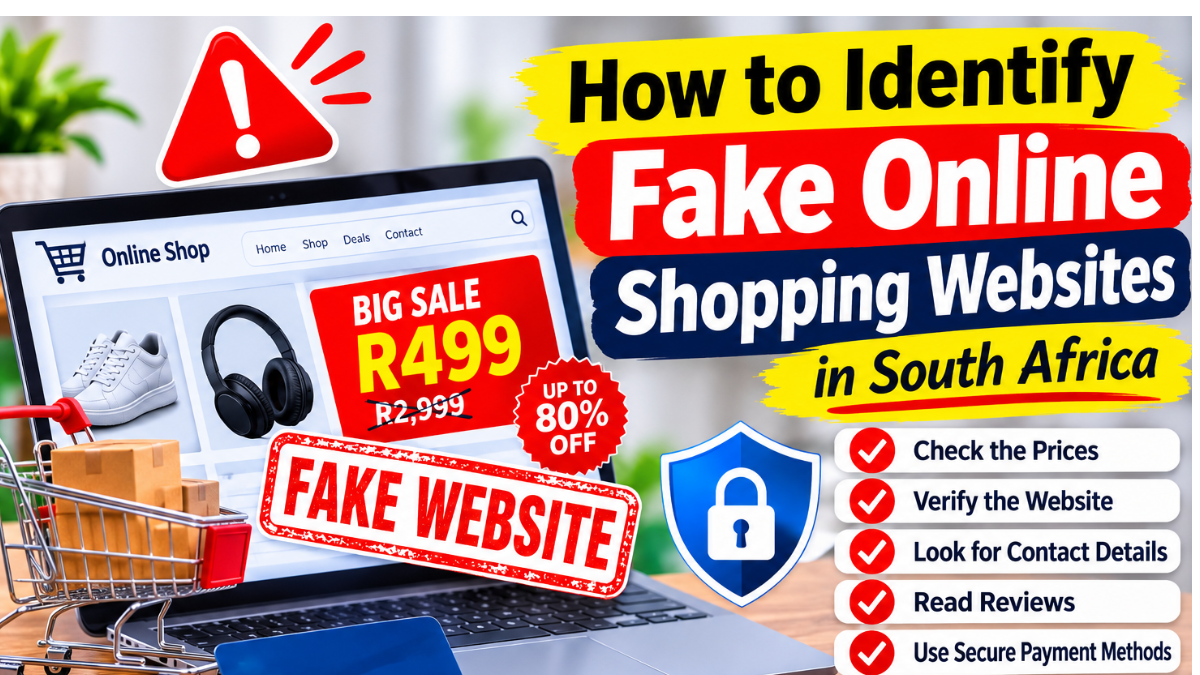
How to Identify Fake Online Shopping Websites in South Africa
Online shopping has made it easier for South Africans to purchase clothing, electronics, groceries and household products without leaving their homes. However, the growing popularity of online shopping has also created opportunities for criminals to steal money and personal information through fake shopping websites.
Some fraudulent websites look almost identical to legitimate online stores. They use professional product photographs, attractive discounts, convincing advertisements and fake customer reviews to make shoppers believe they are dealing with genuine businesses.
Unfortunately, many people only discover that they have been scammed after paying for products that never arrive.
Knowing how to identify a fake online shopping website before entering your banking details can help protect your money and personal information.
Here are eight warning signs to look out for when shopping online in South Africa.
1. Prices That Are Too Good to Be True
One of the easiest ways to recognise a suspicious online store is by looking at its prices.
Scammers frequently advertise expensive products at unusually low prices to attract customers. For example, a website might advertise a smartphone normally selling for R15,000 at only R2,500.
Although genuine retailers sometimes offer special promotions, extremely large discounts should make you investigate further.
Compare the advertised price with established retailers before making a purchase. If the difference is unusually large and the seller cannot provide a reasonable explanation, consider shopping elsewhere.
2. Check the Website Address Carefully
Fake shopping websites sometimes use website addresses that closely resemble those of established retailers.
A scammer might change one letter, add an extra word or use a different domain extension to make a fraudulent website appear genuine.
For example, a website may use a name that looks similar to a recognised clothing or electronics retailer.
Before purchasing anything, carefully examine the website address in your browser.
If you reached the website through a WhatsApp message, email or social media advertisement, avoid assuming that the link is legitimate.
Instead, search for the retailer independently and visit its verified website.
3. Look for Genuine Business Contact Information
Legitimate online businesses should provide information that allows customers to identify and contact the company.
South Africa’s Electronic Communications and Transactions Act requires online suppliers to make certain business information available to consumers.
This includes the company’s full name, physical address, telephone number, email address and, where applicable, company registration details.
Be cautious when a shopping website only provides a WhatsApp number, a generic email address or a contact form without identifying the business behind it.
You can also independently check whether the company’s published details are genuine.
A website displaying business information does not automatically mean that the business is trustworthy. Scammers can copy legitimate company details.
4. Be Careful of Websites With No Customer Reviews
Customer reviews can help you understand whether an online retailer delivers products and treats customers fairly.
However, fake shopping websites sometimes publish fabricated testimonials to create the impression that many people have purchased from them.
Look beyond the reviews displayed on the website itself.
Search for the retailer’s name on independent review platforms and social media. Pay attention to complaints about missing deliveries, poor communication, unexpected charges and refund problems.
You can also search the business name alongside words such as “scam”, “complaints” or “fraud”.
Be particularly careful when a website has no independent online reputation and appears to have been created recently.
5. Check Whether the Website Has Proper Payment Methods
The payment process can reveal important warning signs.
Be cautious when an unfamiliar online store insists that customers pay through direct bank transfers, personal accounts or unusual payment arrangements.
A suspicious retailer may also pressure customers to make immediate payments before an advertised promotion expires.
Whenever possible, use recognised payment gateways and payment methods that provide appropriate transaction protections.
Never share your banking PIN, online banking password or one-time password with a seller.
Remember that an HTTPS connection or padlock symbol only indicates that the connection is encrypted. It does not prove that the business operating the website is legitimate.
6. Read the Delivery, Refund and Return Policies
Before placing an order, check whether the website explains how deliveries, returns, refunds and exchanges work.
A legitimate retailer should provide clear information about its shopping terms and customer service procedures.
Be suspicious of websites that have copied policies containing another company’s name, provide contradictory information or offer no meaningful explanation of how customers can request refunds.
Pay attention to delivery charges, estimated delivery periods and the conditions attached to returns.
If you cannot understand how to contact the business when something goes wrong, reconsider making a purchase.
7. Watch Out for Fake Social Media Advertisements
Many fraudulent online stores attract customers through Facebook, Instagram, TikTok and WhatsApp advertisements.
These advertisements often feature expensive products at discounted prices and encourage shoppers to follow links to unfamiliar websites.
A professional-looking advertisement does not guarantee that the business is legitimate.
Scammers can use stolen product photographs, company logos and fabricated customer testimonials to make their advertisements appear genuine.
Before purchasing, investigate the business independently instead of relying on the information provided in the advertisement.
8. Use Online Scam-Checking Resources
South African consumers can use available resources to investigate suspicious websites before making payments.
The South African Fraud Prevention Service (SAFPS) provides a website-scanning tool through its Yima platform.
The tool can help consumers identify potentially suspicious websites and report suspected scams.
You should also check information from established banks and the South African Police Service about common online shopping fraud techniques.
Taking a few minutes to investigate an unfamiliar retailer could prevent you from losing thousands of rand.
What Should You Do If You Have Already Purchased From a Fake Website?
If you suspect that you have purchased from a fraudulent online store, act immediately.
Contact your bank using its official fraud reporting channels and explain what happened. If you paid using a bank card, ask whether the transaction can be disputed or reversed.
If you shared your banking information, request assistance securing your account and changing compromised credentials.
Keep copies of payment confirmations, messages, emails, website addresses and advertisements as evidence.
You should also report suspected fraud to the South African Police Service and consider reporting the matter to the National Consumer Commission.
Do not send additional money if the seller demands extra payments for delivery, customs charges or refunds without proper verification.
Conclusion
Fake online shopping websites are becoming increasingly convincing, making it important for South African consumers to investigate unfamiliar retailers before spending their money.
Always compare prices, verify business information, examine website addresses and investigate independent customer reviews.
Most importantly, never allow attractive discounts or urgent advertisements to pressure you into making a payment before checking whether the seller is genuine.
A few minutes of careful investigation could save you from losing your hard-earned money to online shopping fraud.