
Concor Enters Business Rescue: More Than 2,200 Jobs at Risk as South African Construction Giant Faces Financial Crisis
Concor business rescue puts more than 2,200 jobs at risk as the South African construction company faces major liabilities and financial pressure.
South African construction company Concor has entered voluntary business rescue proceedings after experiencing serious financial difficulties, raising concerns about jobs, major infrastructure projects and the future of one of the country’s established construction businesses.
The development was reported by Moneyweb on 2 November 2026, following the company’s decision to begin a formal rescue process. More than 2,200 people’s employment is believed to be at risk as the company attempts to address its financial position.
Concor is involved in several major construction and engineering activities, including infrastructure, mining and building operations. Its financial difficulties could therefore have consequences beyond the company itself, particularly for suppliers, subcontractors and projects that depend on its services.
The situation also raises questions about the challenges facing South Africa’s construction industry, where major contractors have struggled with expensive legacy projects, financial pressure and insufficient work opportunities.
Why Concor entered business rescue
According to information reported by Moneyweb, Concor’s financial position has deteriorated significantly.
In a sworn statement supporting the business rescue process, chief executive Marius Koen disclosed that the company’s contingent liabilities linked to current projects exceeded R1.6 billion.
The statement also recorded estimated creditors of approximately R190 million, mainly consisting of shareholder loan funding. Additional inter-company payables were listed at R34 million in the company’s draft financial statements for the 2026 financial year.
Litigation-related contingent liabilities were estimated at approximately R218 million.
One of the most striking details concerned the company’s immediately available resources. Koen reported cash and cash equivalents of around R4,000, while trade and other receivables amounted to approximately R11,000.
Together, those amounts total just R15,000.
However, the company also has investments in subsidiaries and inter-company receivables. Its complete asset and liability position still needs to be established through the rescue process.
The figures illustrate the seriousness of the financial challenges confronting the business.
More than 2,200 jobs could be affected
The possible employment consequences are among the biggest concerns surrounding Concor’s financial crisis.
Moneyweb reported that more than 2,200 people’s employment could be placed in jeopardy. This includes approximately 600 permanent head-office employees and around 1,500 fixed-term contractors, according to the report.
The figures should be understood as an estimate of potential exposure rather than confirmation that these workers have already lost their jobs.
The distinction is important because business rescue is intended to investigate whether a financially distressed company can continue operating or be restructured to preserve value.
The process may involve negotiations with creditors, operational changes, financial restructuring and decisions about which parts of the business can remain viable.
Concor’s business rescue practitioners will therefore have an important responsibility in assessing the company’s operations and the available options.
Employees, suppliers and subcontractors will be watching closely for further information about the process and its possible effect on their livelihoods.
Government pension funds own the company
Concor is now wholly owned by two public-sector funds: the Government Employees Pension Fund (GEPF) and the Unemployment Insurance Fund (UIF).
According to the information reported by Moneyweb, the GEPF holds 81.25% of the company’s shareholding, while the UIF owns the remaining 18.75%.
The Public Investment Corporation (PIC) manages the assets of both funds.
The ownership structure makes the situation particularly important because the company’s financial difficulties involve investments connected to public-sector pension and unemployment funds.
The PIC told Moneyweb that Concor’s board informed it on 6 October 2026 that the company had filed for business rescue.
The corporation said it would work with the joint business rescue practitioners to protect the value of its clients’ investments, explore ways to sustain operations and protect jobs.
The PIC also explained that it had supported previous restructuring initiatives, including converting approximately R1.18 billion of shareholder debt into preference equity in May 2025.
Despite those interventions, Concor continued to face financial pressure.
The Msikaba Bridge project faces attention
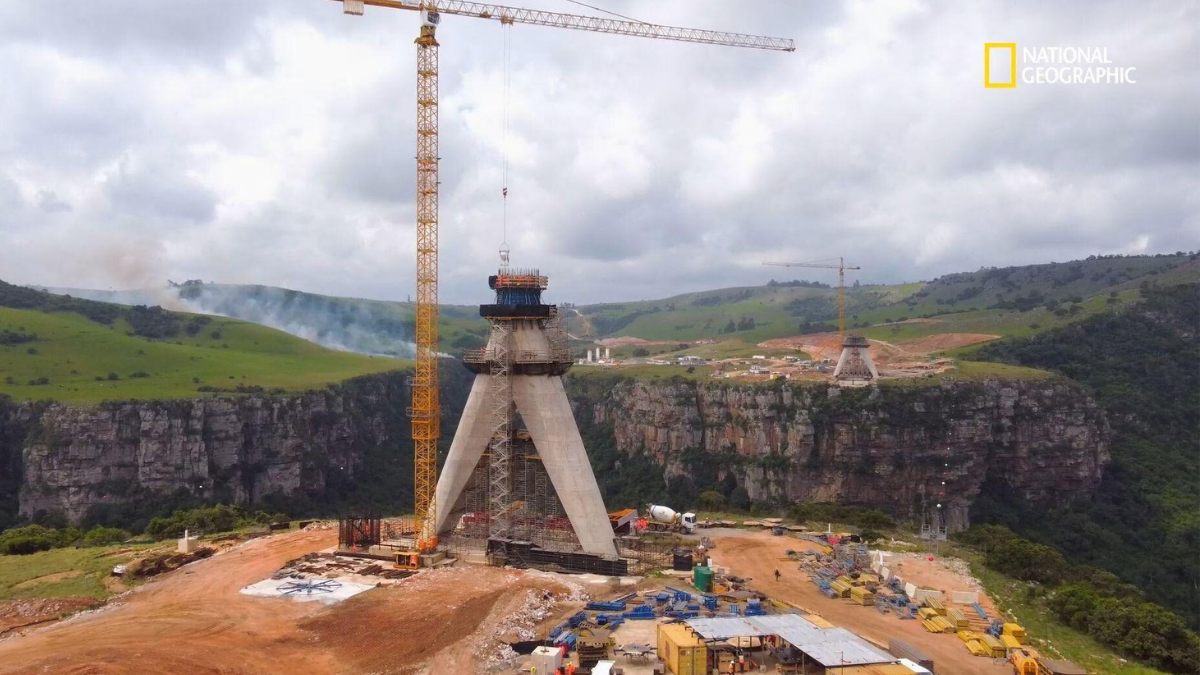
One of Concor’s most prominent infrastructure contracts involves the Msikaba Bridge in the Eastern Cape.
The company partnered with Mota-Engil Construction South Africa on the R1.65 billion project, which forms part of the South African National Roads Agency’s wider N2 Wild Coast Toll Road development.
The bridge is an important component of the broader transport infrastructure programme intended to improve connectivity along the Eastern Cape’s Wild Coast.
However, the project has experienced delays.
Concor’s entry into business rescue raises questions about how its financial position could affect its responsibilities within the joint venture.
The rescue process does not automatically mean that the project will be cancelled or abandoned. Its future will depend on contractual arrangements, the position of the joint-venture partners and decisions made during the restructuring process.
Sanral had not responded to Moneyweb’s request for comment at the time of its report.
Previous construction projects added financial pressure
Concor’s difficulties are also connected to problems involving earlier projects.
One significant issue involved the Wolf Wind Farm project in the Eastern Cape, which the company was developing in a joint venture with Murray & Roberts’ OptiPower division.
Following financial difficulties involving its former joint-venture partner, Concor faced demands relating to project guarantees.
The company unsuccessfully approached the High Court in May 2025 in an attempt to prevent those demands from being made.
The resulting financial exposure contributed to the pressure on a business already dealing with liquidity constraints and underperforming legacy projects.
The situation demonstrates how problems involving one construction contract can create wider consequences for a contractor, particularly when guarantees, joint ventures and substantial project obligations are involved.
South Africa’s construction industry faces wider challenges
Concor’s situation comes after several other established construction businesses experienced financial difficulties.
Group Five entered business rescue in 2019, while Murray & Roberts faced liquidation proceedings in 2025. Basil Read also remains in business rescue.
Master Builders South Africa executive director Roy Mnisi told Moneyweb that large construction companies need substantial work opportunities to support their operating costs.
He suggested that insufficient construction work in the country could have contributed to Concor’s financial difficulties.
Mnisi also highlighted the importance of implementing strategic infrastructure projects that have already been identified by government.
For construction companies, major infrastructure contracts provide opportunities to maintain operations, employ workers and support networks of suppliers and subcontractors.
When projects are delayed or insufficient work becomes available, contractors with high overheads can experience serious financial pressure.
What happens next?
Concor’s voluntary business rescue process will now determine whether the business can be stabilised and whether a sustainable future can be achieved.
The notice commencing the proceedings was filed with the Companies and Intellectual Property Commission on 6 October 2026. Joint business rescue practitioners Nndingeni Moses Sigo and Paula Anna-Mart Müller were nominated to oversee the process.
The first meeting of creditors took place on 20 October 2026.
The practitioners will need to examine the company’s financial position, assess its operations and consider available options for creditors and other affected parties.
For workers, suppliers and the construction industry, the immediate concern is whether the process can preserve viable operations and limit the impact on employment.
Concor’s future will also be important for major infrastructure projects in which it participates, particularly where other contractors and public-sector institutions depend on its ability to fulfil contractual responsibilities.
The coming stages of the business rescue process will provide a clearer picture of whether the construction group can recover or whether further restructuring will be required.