
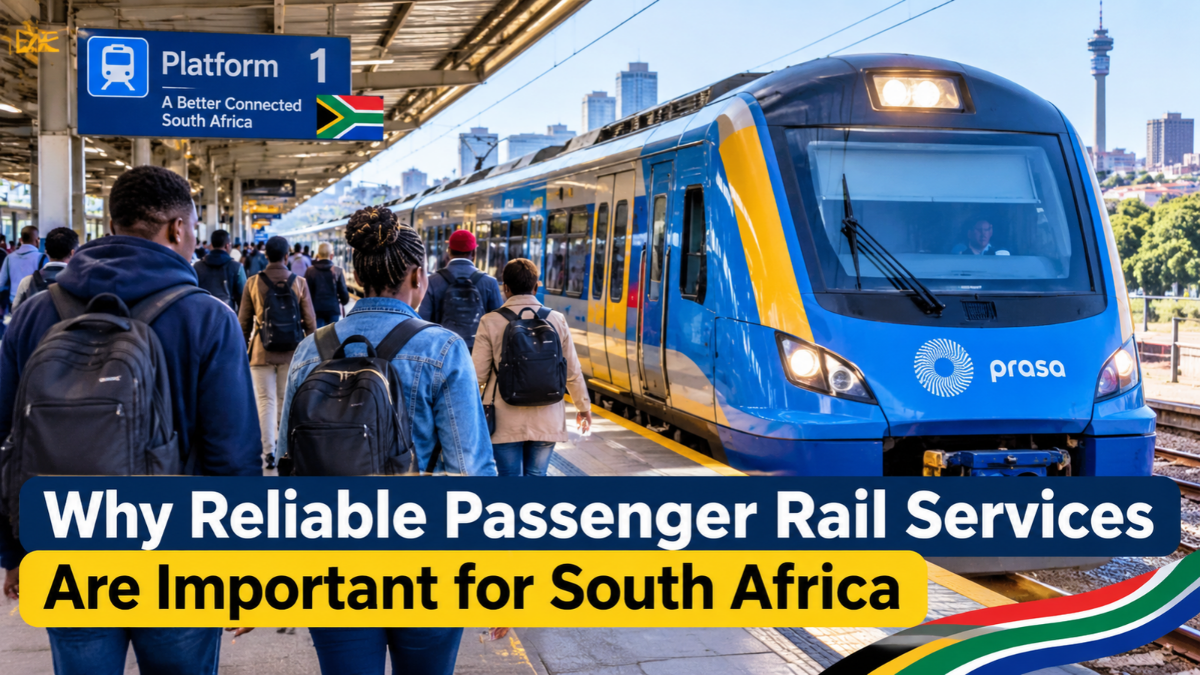
Why Reliable Passenger Rail Services Are Important for South Africa
Reliable public transport is essential for a country’s economic growth, social development and everyday movement. In South Africa, passenger rail services have the potential to make travelling more affordable and accessible for millions of people. However, commuters need trains that operate safely, arrive on time and provide dependable connections between residential areas, workplaces and major economic centres.
For many South Africans, travelling to work or school can be expensive and time-consuming. Improving passenger rail services could help reduce these challenges while supporting employment, business activity and more sustainable transport.
1. Making Daily Commuting More Affordable
Transport costs take up a significant portion of many households’ monthly budgets. Commuters who depend on taxis, buses or private vehicles may spend a considerable amount travelling to and from work.
A reliable passenger rail network can provide a more affordable alternative, particularly for people who travel long distances every day.
Lower commuting expenses could leave households with more money for essential needs such as food, education, housing and healthcare. However, trains must be dependable enough for passengers to use them regularly without needing expensive backup transport.
2. Improving Access to Employment Opportunities
Access to employment is closely connected to transport. People living far from major business districts may struggle to attend interviews, arrive at work on time or accept opportunities in other parts of their cities.
Reliable trains can connect townships, suburbs and surrounding communities with employment centres.
For job seekers, affordable rail transport could make it easier to attend interviews and explore opportunities beyond their immediate neighbourhoods. Workers could also benefit from more predictable travel times, helping them manage their daily schedules.
Improved rail connections may therefore contribute to a more accessible labour market.
3. Supporting South Africa’s Economic Growth
Passenger rail services play an important role in moving people who contribute to the economy. When transport systems operate efficiently, employees can reach workplaces, students can attend educational institutions and customers can access businesses.
Unreliable services can create delays that affect productivity. Workers may arrive late, businesses may experience staffing difficulties and commuters may lose valuable time waiting for alternative transport.
Investing in rail infrastructure, maintenance and reliable operations can help reduce these disruptions. It can also create work opportunities in railway construction, engineering, maintenance, security and operations.
4. Reducing Road Congestion
South African cities experience heavy traffic, particularly during morning and afternoon peak periods. A large number of people depend on private cars, taxis and buses to reach their destinations.
A dependable rail network can carry many passengers on a single train, reducing the number of individual vehicles needed on busy roads.
If more commuters choose trains because they are safe, affordable and punctual, road congestion could ease in some areas. This may also help reduce commuting delays and pressure on road infrastructure.
However, passengers are unlikely to leave their existing transport options unless rail services offer a practical and reliable alternative.
5. Improving Safety and Passenger Confidence
Safety is one of the most important factors influencing public transport choices. Passengers need to feel protected at stations, while boarding trains and throughout their journeys.
Reliable passenger rail services require properly maintained trains, secure stations, effective lighting, functioning signalling systems and adequate security measures.
Clear communication is also important. When delays, cancellations or service interruptions occur, commuters should receive accurate information as quickly as possible.
Building passenger confidence requires consistent service improvements rather than temporary interventions. People are more likely to use trains when they can depend on the service and feel safe during their journeys.
6. Connecting Communities With Education and Healthcare
Passenger rail services do more than transport workers. They can also connect communities with schools, colleges, universities, hospitals and other essential services.
Students who live far from educational institutions may benefit from affordable and predictable train services. Similarly, people travelling to hospitals or medical appointments need transport options that allow them to arrive on time.
Improving connections between residential communities and essential facilities can help reduce the transport barriers faced by low-income households.
7. Supporting Environmental Sustainability
Transport contributes to air pollution and greenhouse gas emissions, particularly when large numbers of vehicles depend on fossil fuels.
Passenger rail can offer environmental benefits when trains carry many people efficiently. Electrified rail services can reduce direct emissions from transport operations, although the overall environmental impact also depends on how electricity is generated and how efficiently the railway operates.
Encouraging greater use of public transport could help South Africa work towards more sustainable urban mobility.
8. What Needs to Improve?
For passenger rail to become a dependable transport option, several areas require attention.
These include:
- Infrastructure maintenance: Tracks, bridges, signalling equipment and stations must be maintained regularly.
- Reliable schedules: Trains should operate according to published timetables, with clear updates when disruptions occur.
- Passenger safety: Stations and trains need effective security and adequate lighting.
- Modern equipment: Ageing trains and railway technology require appropriate upgrades and maintenance.
- Better connections: Rail services should connect effectively with taxis, buses and other public transport options.
- Transparent management: Passengers need clear information about service performance, disruptions and improvement plans.
These improvements require consistent planning, funding, maintenance and accountability.
Conclusion
South Africa needs reliable passenger rail services because affordable and dependable transport supports employment, education, economic activity and access to essential services.
A stronger railway network could reduce pressure on roads, improve commuting options and make it easier for people to participate in the economy. However, achieving these benefits will depend on sustained investment, effective maintenance, passenger safety and services that commuters can trust.
For millions of South Africans, a reliable train service is not simply a convenience. It can make the difference between reaching an opportunity and missing it.