
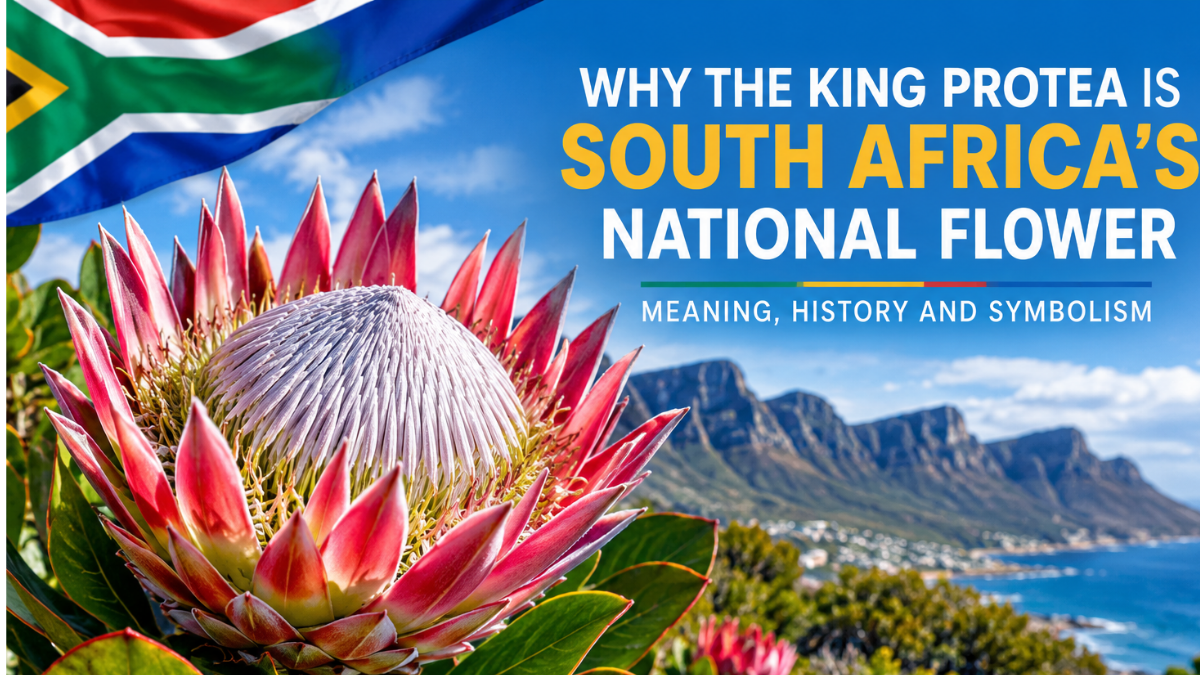
Why the King Protea Is South Africa’s National Flower: Meaning, History and Symbolism
Discover why the King Protea is South Africa’s national flower, what it symbolises, where it grows and why it is important to the country’s natural heritage.
The King Protea (Protea cynaroides) is South Africa’s national flower. It represents the country’s natural beauty, rich biodiversity and distinctive botanical heritage. The flower is also a familiar symbol of national pride, appearing alongside other important national symbols that reflect South Africa’s history and identity.
But why was the protea chosen as the national flower, and what makes it so special?
WHAT IS THE KING PROTEA?
The King Protea is a flowering plant native to South Africa. It belongs to the Proteaceae family, a group of plants known for their unusual and often spectacular flower structures.
Its flower head is large and rounded, surrounded by colourful, pointed bracts that can range from pale pink and cream to deep pink and reddish shades. These bracts give the flower its distinctive appearance.
Although people commonly refer to it as a single flower, what appears to be one large bloom is actually a collection of many smaller flowers grouped together in a flower head.
The King Protea grows naturally in the fynbos vegetation of the Western Cape, particularly in mountainous areas where the climate and soil conditions support its growth.
Its impressive appearance has made it popular in gardens, floral arrangements and botanical collections both in South Africa and internationally.
WHY WAS THE PROTEA CHOSEN AS SOUTH AFRICA’S NATIONAL FLOWER?
The protea was selected as South Africa’s national flower because it is an important part of the country’s indigenous plant heritage.
South Africa has an exceptionally rich variety of plant life, and the King Protea is one of the most distinctive examples of this natural diversity.
The flower provides a recognisable symbol of the country’s unique environment and helps represent the natural resources that make South Africa special.
Its selection also reflects the importance of protecting indigenous plants and preserving the country’s biodiversity for future generations.
The King Protea’s bold appearance and ability to survive in its natural environment have helped establish it as an enduring national emblem.
WHAT DOES THE PROTEA SYMBOLISE?
The protea is associated with several qualities that make it meaningful as a national symbol.
1. NATURAL BEAUTY
The King Protea’s striking flower head represents the beauty of South Africa’s natural landscapes. From the Cape mountains to the country’s diverse vegetation, South Africa offers a remarkable range of natural environments.
The flower provides a visible reminder of this botanical richness.
2. DIVERSITY
South Africa is home to a wide variety of plant and animal species, languages, cultures and traditions.
The protea is an important symbol of the country’s natural diversity. Its inclusion among South Africa’s national symbols reinforces the value of recognising and protecting the country’s distinctive heritage.
3. RESILIENCE
The King Protea is adapted to the environmental conditions of the fynbos region. Many fynbos plants have evolved strategies that allow them to survive in landscapes affected by periodic fires and other natural challenges.
Some protea species regenerate from seeds after fires, while others can regrow from protected underground structures. The survival strategies differ between species.
These adaptations make proteas interesting examples of how indigenous plants respond to their environment.
4. NATIONAL PRIDE
The protea is more than an attractive flower. It is a recognised emblem of South Africa and a source of national pride.
It appears on the country’s national coat of arms, where the protea represents the beauty of the land and the flowering of South Africa’s potential.
Its presence in national imagery connects the country’s natural heritage with its broader national identity.
WHERE DOES THE KING PROTEA GROW?
The King Protea grows naturally in South Africa, particularly in the Western Cape’s fynbos region.
Fynbos is a distinctive type of vegetation found mainly in the Cape Floristic Region. It contains an extraordinary variety of plant species, many of which occur naturally nowhere else in the world.
The King Protea is adapted to the nutrient-poor soils and seasonal conditions found in parts of this region.
It generally grows best in well-drained soil and conditions suited to its natural environment. Excessive watering and poorly drained soil can damage cultivated plants.
Although proteas are associated with the Western Cape, different members of the protea family occur in other parts of South Africa and across parts of southern Africa.
The country’s varied landscapes and climates support a remarkable diversity of indigenous flowering plants.
WHY IS THE PROTEA IMPORTANT TO SOUTH AFRICA’S ENVIRONMENT?
The protea is important not only because of its national status but also because it forms part of South Africa’s natural ecosystems.
Protea flower heads can provide food for nectar-feeding birds and insects. Depending on the species and location, these visitors may help with pollination.
The plants also contribute to the ecological diversity of the fynbos region, one of the world’s most remarkable areas for plant diversity.
However, indigenous vegetation faces threats from habitat loss, invasive alien plants, inappropriate land use and changes in environmental conditions.
Protecting natural habitats helps preserve the protea and the many other species that depend on these ecosystems.
People can contribute by protecting indigenous vegetation, avoiding the removal of wild plants and choosing suitable indigenous species for gardens.
THE PROTEA ON SOUTH AFRICA’S NATIONAL COAT OF ARMS
The protea also features prominently on South Africa’s national coat of arms.
The national coat of arms was introduced on 27 April 2000 and reflects the country’s identity, heritage and aspirations.
The protea appears in the design as a symbol of the beauty of the land and the flowering of South Africa’s potential.
Its inclusion demonstrates the importance of indigenous plants in the country’s national identity.
Alongside other elements of the coat of arms, the protea helps communicate the values and aspirations associated with South Africa’s democratic era.
INTERESTING FACTS ABOUT THE KING PROTEA
Here are several interesting facts about South Africa’s national flower:
- Scientific name: The King Protea is scientifically known as Protea cynaroides.
- Indigenous plant: It is native to South Africa.
- Distinctive appearance: It has a large flower head surrounded by colourful bracts.
- Natural habitat: It grows naturally in the fynbos vegetation of the Western Cape.
- National symbol: It is officially recognised as South Africa’s national flower.
- Coat of arms: The protea is included in South Africa’s national coat of arms.
- Plant diversity: The protea family contains numerous species with different shapes, colours and growing requirements.
These features help explain why the King Protea is so widely recognised and valued.
CONCLUSION
The King Protea is South Africa’s national flower because it represents the country’s unique botanical heritage and natural beauty.
Its distinctive appearance, indigenous origins and connection to the Cape’s remarkable fynbos vegetation make it an important national symbol.
The protea also reminds South Africans of the importance of protecting indigenous plants and preserving the country’s biodiversity.
Whether growing naturally on a mountainside or appearing in a national emblem, the King Protea remains a powerful representation of South Africa’s natural identity.
Its beauty is a reminder that the country’s heritage is found not only in its people and history but also in the extraordinary natural world that surrounds them.