
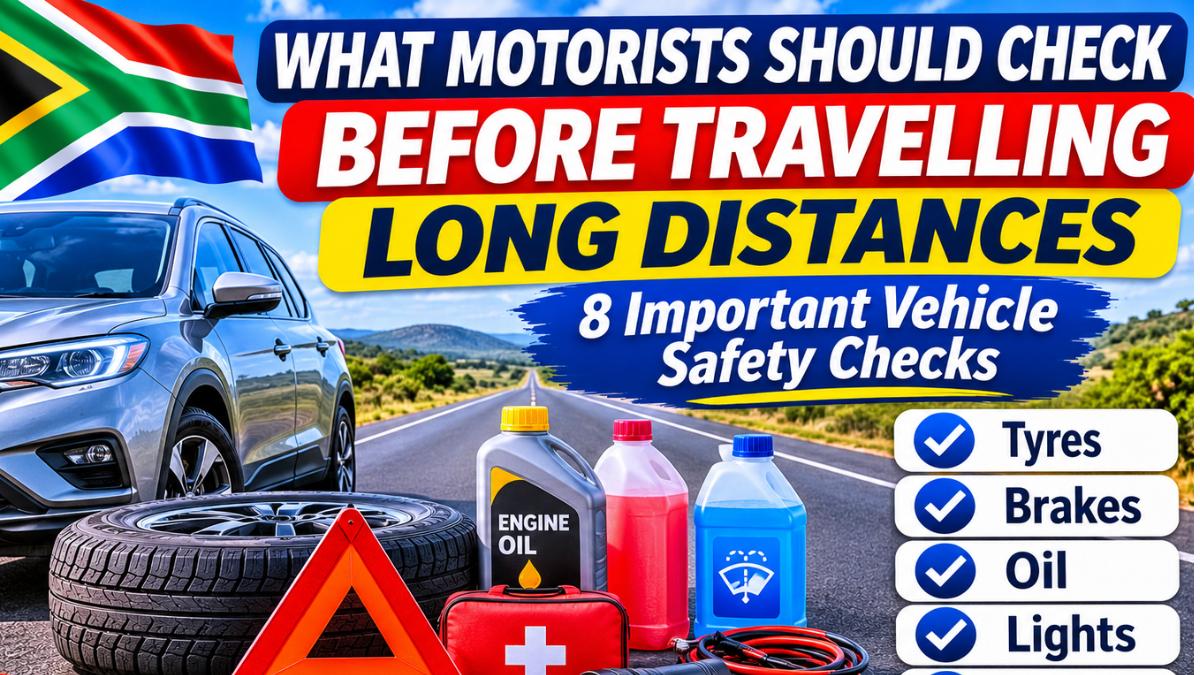
What Motorists Should Check Before Travelling Long Distances in South Africa
Long-distance travelling is common in South Africa, especially during school holidays, long weekends and the December festive season. Thousands of motorists travel between provinces to visit family members, attend celebrations or enjoy holidays at popular destinations.
However, driving long distances without properly preparing your vehicle can increase the risk of breakdowns and road accidents.
A vehicle that appears to be working normally during short trips may develop problems when exposed to several hours of continuous driving. Issues involving tyres, brakes, engine temperature and other important components can become serious safety concerns.
Before starting a long journey, motorists should take time to inspect their vehicles and ensure everything is in good working condition.
Here are eight important things every South African motorist should check before travelling long distances.
1. Check Your Tyres and Spare Wheel
Tyres are among the most important safety components of any vehicle.
Before travelling, inspect all four tyres for visible damage, cracks, bulges and uneven wear. Tyres with insufficient tread can reduce road grip, particularly when driving in wet weather.
Check that your tyre pressure meets the manufacturer’s recommended specifications. You can usually find this information in the vehicle owner’s manual or on a label inside the driver’s door.
Do not forget to inspect your spare wheel.
A spare tyre that is damaged or underinflated may be useless when you experience a puncture far from the nearest service station.
Motorists should also ensure that they have the necessary tools to change a wheel safely.
2. Inspect Your Brakes
Your braking system must be in good condition before undertaking a long journey.
Brakes that are worn or damaged can make it difficult to stop safely, particularly when travelling at highway speeds or driving through mountainous areas.
Pay attention to warning signs such as unusual noises, vibrations when braking, a soft brake pedal or the vehicle taking longer than usual to stop.
If you notice any of these problems, have your vehicle inspected by a qualified mechanic before travelling.
Never ignore brake warning lights or assume that a minor braking problem will disappear during the journey.
3. Check Your Engine Oil and Other Fluids
Engine oil plays an important role in protecting the moving components inside your vehicle.
Before leaving, check the engine oil level according to the manufacturer’s instructions.
If the oil level is low, top it up using the correct oil recommended for your vehicle.
You should also inspect other important fluids, including:
- Engine coolant.
- Brake fluid.
- Power steering fluid, where applicable.
- Windscreen washer fluid.
- Transmission fluid, where applicable.
Coolant is particularly important because it helps regulate engine temperature.
Never open a hot radiator or coolant reservoir that is pressurised. Allow the engine to cool before carrying out any inspection that requires opening the cooling system.
4. Test Your Lights and Indicators
Good visibility is essential when driving, particularly at night, during heavy rain or in areas with limited street lighting.
Before travelling, check that all your vehicle lights are functioning properly.
These include headlights, brake lights, indicators, reverse lights, hazard lights and rear lights.
Ask someone to help you confirm that the brake lights and indicators are working correctly.
Also ensure that your headlights are clean and properly adjusted.
Faulty lights can make it difficult for other motorists to identify your vehicle’s movements, increasing the possibility of an accident.
5. Inspect Your Battery
A weak or damaged battery can leave you stranded, particularly when travelling far from home.
Check for signs of battery problems, including difficulty starting the engine, dim headlights and dashboard warning indicators.
If your battery is several years old or has recently struggled to start the vehicle, consider having it tested before your journey.
Make sure the battery terminals are clean and properly secured.
Motorists should also know where to get roadside assistance if their vehicle experiences electrical problems during the trip.
6. Check Your Windscreen Wipers and Windscreen Condition
Good visibility can make a significant difference when driving long distances.
Inspect your windscreen for cracks or damage that could affect your ability to see the road clearly.
Check that your windscreen wipers are functioning properly and that the rubber blades are not worn or damaged.
Replace ineffective wiper blades before travelling.
Also make sure that your windscreen washer system contains enough cleaning fluid.
South African weather conditions can change quickly, and motorists may encounter rain, dust and insects that reduce visibility.
7. Prepare an Emergency Kit
Unexpected problems can occur even when your vehicle has been properly maintained.
An emergency kit can help motorists deal with minor difficulties while waiting for assistance.
Consider carrying the following items:
- A spare tyre and wheel-changing equipment.
- A reflective warning triangle.
- A first-aid kit.
- A torch with spare batteries.
- Jumper cables or a suitable jump starter.
- Drinking water.
- A basic tool kit.
- A charged mobile phone and charging cable.
Motorists should also keep their roadside assistance contact details easily accessible.
If your vehicle breaks down, move to a safe location away from moving traffic where possible and follow appropriate roadside safety procedures.
8. Check Your Vehicle Documents and Plan Your Route
Vehicle preparation is not limited to mechanical inspections.
Before travelling, ensure that your driver’s licence is valid and that your vehicle’s licensing and registration details are in order.
Plan your route before leaving and identify suitable places to stop for fuel, food and rest.
Check traffic reports and weather conditions, especially when travelling on unfamiliar roads.
South Africa has several major long-distance routes, including the N1, N2, N3 and N4. These roads can become particularly busy during holiday periods.
Allow enough travelling time and avoid rushing to reach your destination.
Why Drivers Should Avoid Travelling When Tired
Even a well-maintained vehicle cannot protect motorists from the dangers of driver fatigue.
Driving for several hours without taking breaks can reduce concentration, slow reaction times and increase the risk of falling asleep behind the wheel.
Motorists should plan regular rest stops during long journeys.
If you feel sleepy, struggle to concentrate or begin drifting between lanes, find a safe place to stop and rest.
Do not rely on loud music, open windows or excessive caffeine as substitutes for proper rest.
If possible, share driving responsibilities with another qualified and rested driver.
Final Thoughts
Long-distance journeys require more preparation than ordinary daily driving.
Checking your tyres, brakes, engine fluids, battery and lights can help identify problems before they become dangerous or expensive.
Motorists should also prepare emergency supplies, plan their routes and make sure they are physically fit to drive.
Whether you are travelling to another province for the December holidays or taking a weekend trip with your family, vehicle safety should always come first.
A few minutes spent checking your vehicle before departure could help prevent breakdowns, reduce accident risks and ensure that you reach your destination safely.