
South Africa’s Job Crisis Deepens: 5 Warning Signs as Businesses Cut Staff
South Africa’s job crisis deepens as businesses cut staff at the fastest rate in six years amid weak demand, higher fuel costs and port delays.
South African businesses are facing another difficult period after a new business survey revealed that private-sector activity remained in contraction during October 2026. The findings have raised fresh concerns about employment, business confidence and the cost of running companies across the country.
The S&P Global South Africa Purchasing Managers’ Index (PMI) remained at 49.0 in October, unchanged from September. A reading below 50 indicates deteriorating business conditions, while a reading above 50 signals improvement.
One of the most concerning findings was that companies reduced staffing at the fastest rate in six years. Businesses also reported weaker customer demand, higher fuel costs and delays affecting the movement of goods through ports.
The results suggest that many South African companies are still struggling to build momentum despite hopes for stronger economic activity. Here are five important warning signs from the latest survey and what they could mean for workers, businesses and consumers.
1. Businesses are cutting jobs at the fastest rate in six years
The biggest concern from the October survey is the sharp decline in employment. Companies reported reducing staff numbers for the third consecutive month, with the rate of job shedding reaching its fastest level in six years. Businesses attributed the reductions to weaker demand, redundancies, dismissals and employees leaving their positions.
When companies receive fewer orders and struggle to cover operating expenses, they may become more cautious about hiring or retaining staff. This creates additional pressure in a country already dealing with high unemployment. For job seekers, the findings suggest that competition for available positions could remain difficult, particularly in industries experiencing weaker demand.
However, the survey does not provide a national count of jobs lost. It measures conditions among participating private-sector businesses and should not be interpreted as proof that every industry is reducing employment.
2. Business confidence falls to its weakest level since 2020
Another worrying finding concerns how companies view the future. S&P Global reported that business confidence fell to its lowest level since August 2020. Expectations for activity over the next 12 months weakened across all the sectors covered by the survey.
David Owen, principal economist at S&P Global Market Intelligence, identified the decline in confidence as one of the most concerning signals from the latest results. Companies remain cautious because of economic uncertainty, higher operating expenses and difficulties securing new business.
Low confidence can influence important decisions. Businesses may delay expansion plans, postpone equipment purchases or become more careful about hiring additional workers. Although companies still expected output to increase on average over the coming year, their optimism weakened considerably.
The findings therefore point to uncertainty rather than a guarantee that the economy will continue deteriorating throughout 2027.
3. Higher fuel costs are putting pressure on companies
Fuel prices remain an important challenge for businesses operating in South Africa. Companies depend on transport to move raw materials, deliver products and serve customers. When fuel becomes more expensive, transport costs can rise throughout the supply chain.
The October survey showed that purchase-price inflation accelerated to its highest level since June. Businesses reported that higher fuel expenses contributed to increased operating costs. Some companies responded by passing part of those increases on to customers through higher selling prices.
The survey also recorded a four-month high in output-price inflation. This matters to ordinary households because companies facing higher costs may eventually increase prices for certain products and services. However, the PMI findings do not mean every shop or business will raise prices by the same amount. The effect depends on the industry, competition and how much of the additional cost a company can absorb. The survey also reflects October trading conditions, so it does not fully capture the effect of fuel-levy relief introduced by government in November.
4. Durban port delays are disrupting business operations
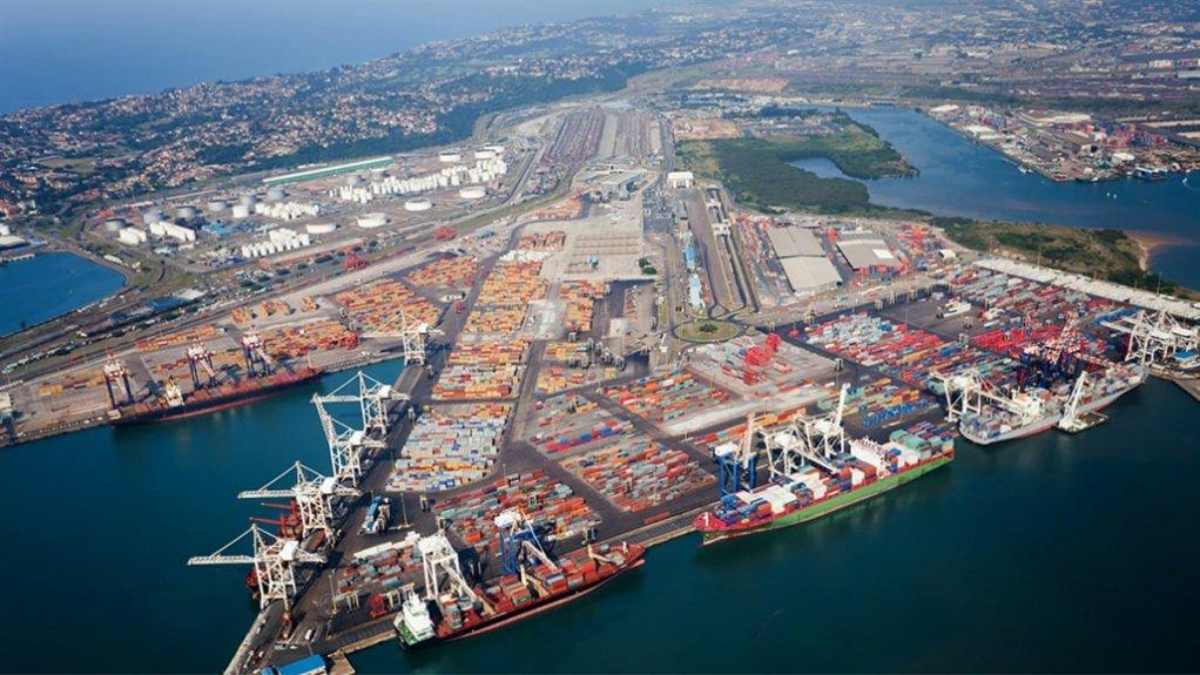
South Africa’s logistics network remains another major concern for companies. Businesses participating in the survey continued reporting supply-chain delays, including problems at the Port of Durban. The port is a major gateway for international trade. Importers rely on it to receive goods and materials, while exporters use it to send South African products to overseas customers.
When cargo movement slows down, businesses may experience longer delivery times, higher transport expenses and uncertainty about when stock will arrive. The survey also identified global shipping delays, shortages of raw materials and reduced transport capacity as contributing pressures.
These problems can affect manufacturers, wholesalers, retailers and exporters. For example, a manufacturer waiting for imported components may struggle to complete orders on schedule. A business relying on imported stock may also face delays that affect its ability to serve customers. Improving port performance and strengthening transport infrastructure could help reduce some of these pressures.
5. New orders remain weak as export demand declines
The survey also showed that new business orders fell again in October. Although the decline was less severe than in September, it indicated that many companies were still struggling to attract enough customers. Export demand also declined for the first time since May.
This is important because South African companies rely on both local and international customers to generate revenue. When households reduce spending and overseas buyers order fewer products, businesses may receive less income. That can make it harder to maintain production levels, pay operating expenses and invest in expansion.
Weak demand can also create a cycle in which businesses reduce staffing and spending, placing additional pressure on economic activity. The survey suggests that companies need stronger customer demand and more reliable supply chains to improve their trading conditions.
What does the PMI result mean for South Africa?
The October PMI reading of 49.0 shows that private-sector business conditions remained under pressure. It is important to understand that the PMI is not the same as South Africa’s official gross domestic product growth figure. It is a survey-based indicator that provides an early picture of business activity, orders, employment, prices and confidence.
A reading below 50 signals deterioration compared with the previous month, but it does not automatically mean that the entire economy is in recession. The latest results nevertheless highlight several challenges that policymakers and business leaders will need to address. Improving electricity and transport infrastructure, reducing unnecessary operating costs and strengthening consumer demand could help businesses become more competitive. Companies will also need a more predictable environment in which they can invest, expand and create employment.
A difficult period for workers and businesses
South Africa’s private sector entered the final months of 2026 facing weaker demand, rising costs and growing uncertainty. The latest survey does not predict the exact number of future job losses, but the six-year high in the rate of staff reductions is an important warning.For workers, the priority remains finding and keeping employment in an increasingly competitive environment. For businesses, restoring confidence and securing new customers will be essential. The coming months will show whether economic conditions improve or whether companies continue struggling with the pressures highlighted in the October survey.