
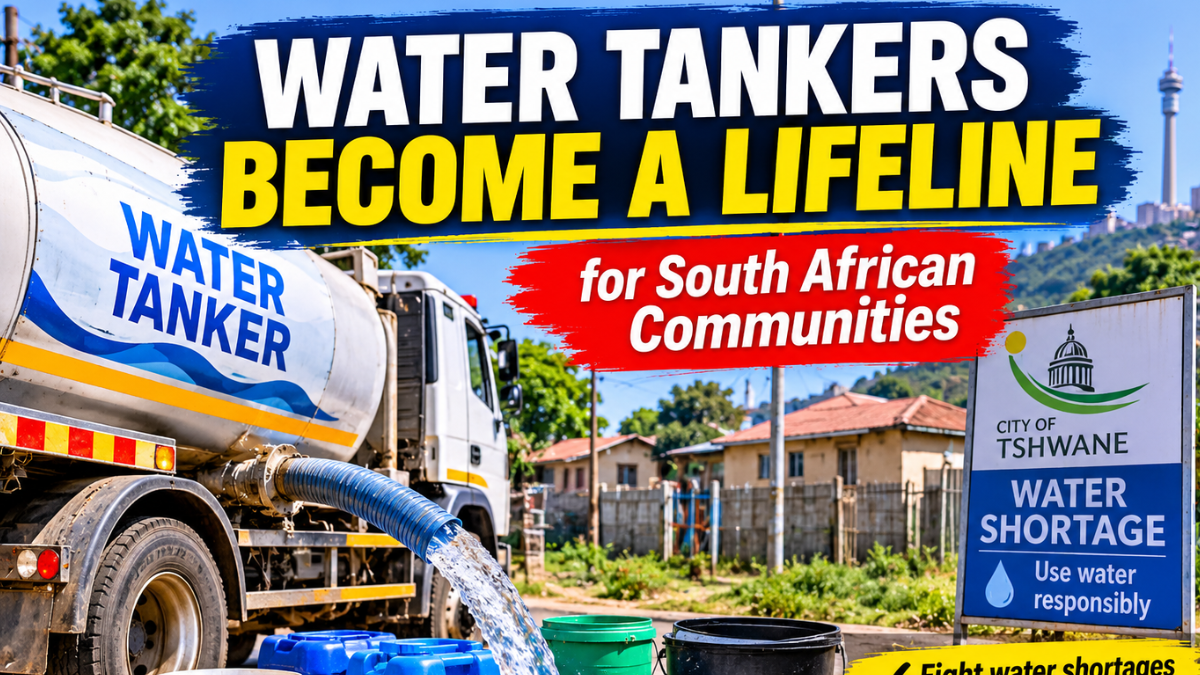
Why Water Tanker Deliveries Have Become Important in Some Communities
Water tanker deliveries have become an increasingly important part of daily life in several South African communities as households continue to experience water shortages, ageing infrastructure and unreliable municipal supplies.
For residents who cannot depend on their taps, water tankers provide an essential alternative for drinking, cooking, washing and other household activities. However, the growing reliance on these emergency deliveries has also raised questions about municipal planning, infrastructure maintenance and the long-term sustainability of water services.
What was originally intended as temporary assistance during emergencies is increasingly becoming a regular feature in communities affected by recurring water disruptions.
1. Water Shortages Leave Households Dependent on Tankers
One of the main reasons water tanker deliveries have become important is the inability of some municipal systems to provide a continuous supply.
Residents in affected areas may go several days or even weeks without running water because of reservoir shortages, damaged pipelines, pump failures or maintenance work.
In some communities, informal settlements and rural areas have limited access to reliable piped water infrastructure. Water tankers therefore provide an important way of delivering water to households that would otherwise struggle to access basic supplies.
The problem has become particularly visible in Gauteng, where water demand, infrastructure failures and supply interruptions have placed pressure on municipal networks.
2. Ageing Infrastructure Is Making Water Supply Unreliable
South Africa’s water infrastructure is facing significant maintenance challenges.
Old pipelines, leaking connections, broken pumps and damaged reservoirs contribute to water losses and interruptions. Even when bulk water suppliers have sufficient capacity, municipal distribution networks may struggle to deliver water consistently to households.
In February 2026, government identified ageing infrastructure, water losses and municipal distribution problems as major factors affecting water reliability in Gauteng.
The government also confirmed that water tankers were being deployed to affected communities while technical teams worked to stabilise supplies.
This demonstrates why tanker deliveries are sometimes necessary even when the country has sufficient water resources at national level.
3. Recent Water Crises Have Increased the Need for Emergency Deliveries
Recent water supply challenges have demonstrated how important alternative water sources can become during emergencies.
In November 2026, the City of Tshwane and Magalies Water reported declining reservoir levels affecting communities supplied through the Wallmannsthal system.
Higher-lying areas experienced reduced pressure and intermittent interruptions. The two institutions confirmed that water tankers were being coordinated for communities experiencing prolonged disruptions, with priority given to the most severely affected areas.
In another serious incident, communities around Bronkhorstspruit experienced a water contamination crisis after problems at the local treatment works raised concerns about the safety of drinking water.
Emergency water deliveries became essential while authorities worked to restore safe supplies.
These situations show that tankers are not only needed when there is no water available. They can also provide an alternative when the water coming through household taps cannot safely be consumed.
4. Water Tankers Help Protect Vulnerable Households
Water interruptions do not affect everyone equally.
Households with storage tanks, boreholes or financial resources may be able to find alternative supplies. However, low-income families, informal settlements and elderly residents often have fewer options.
Schools, clinics, childcare facilities and other public institutions also require dependable water supplies to maintain basic hygiene and daily operations.
Water tankers can help reduce the impact of shortages by delivering water closer to affected communities.
However, successful distribution depends on sufficient vehicles, accessible collection points, reliable delivery schedules and proper communication from municipalities.
5. Delayed Deliveries Create Additional Frustration
Although water tankers provide temporary relief, residents sometimes complain about delays, insufficient quantities and inconsistent delivery schedules.
Some communities have reported difficulties accessing tanker services, particularly when demand increases during major supply interruptions.
Long queues at collection points can also create problems for households that need water for several daily activities.
There are further concerns about whether all communities receive fair access to emergency deliveries.
Municipalities therefore need transparent distribution plans that explain where tankers will operate, when deliveries will take place and how residents can report missed collections.
6. The Cost and Management of Water Tanker Services
The increasing use of water tankers has also raised concerns about municipal spending and procurement.
According to the Auditor-General’s 2025 water report, 59 water services authorities spent approximately R2.32 billion on water tankering during the 2023/24 financial year.
Of this amount, approximately R419.49 million was identified as irregular expenditure linked to unfair or uncompetitive procurement processes.
The report also highlighted weaknesses in controls used to verify invoices and confirm that contracted water deliveries had actually taken place.
These findings underline the importance of transparent contracts, proper monitoring and accountability when municipalities appoint private companies to supply emergency water.
Water tanker services should provide genuine relief to communities rather than become an expensive substitute for repairing permanent infrastructure.
7. Why Permanent Water Solutions Are Still Necessary
While water tankers remain important during emergencies, they cannot replace properly functioning municipal water systems.
Long-term solutions require investment in pipeline replacement, reservoir maintenance, pump stations, water treatment facilities and improved water management.
Municipalities must also address leaks, illegal connections and poor revenue collection to reduce pressure on existing infrastructure.
The Department of Water and Sanitation has emphasised the importance of improving water infrastructure, strengthening municipal management and preparing for increasing demand.
Communities need a reliable supply that reaches their homes through properly maintained distribution networks.
What Residents Should Know About Water Tanker Deliveries
Residents who depend on emergency water supplies should take a few precautions:
- Follow official municipal announcements about tanker locations and delivery times.
- Collect drinking water from authorised and verified suppliers.
- Use clean, food-grade containers with secure lids.
- Keep stored water away from chemicals, dirt and direct contamination.
- Avoid collecting water from unidentified private tankers.
- Report missed deliveries and suspected unsafe water supplies to municipal authorities.
- Follow official boil-water or unsafe-water notices until authorities confirm that normal supplies are safe.
Final Thoughts
Water tanker deliveries have become an important lifeline for communities facing unreliable water supplies across South Africa.
They help households access essential water during infrastructure failures, reservoir shortages, maintenance work and contamination emergencies.
However, the growing dependence on tankers also highlights deeper problems within the country’s municipal water systems.
Residents need more than emergency deliveries. They need functioning infrastructure, properly managed water resources and municipalities that can provide reliable services throughout the year.
Water tankers should remain an emergency solution, not become the permanent answer to South Africa’s water challenges.