
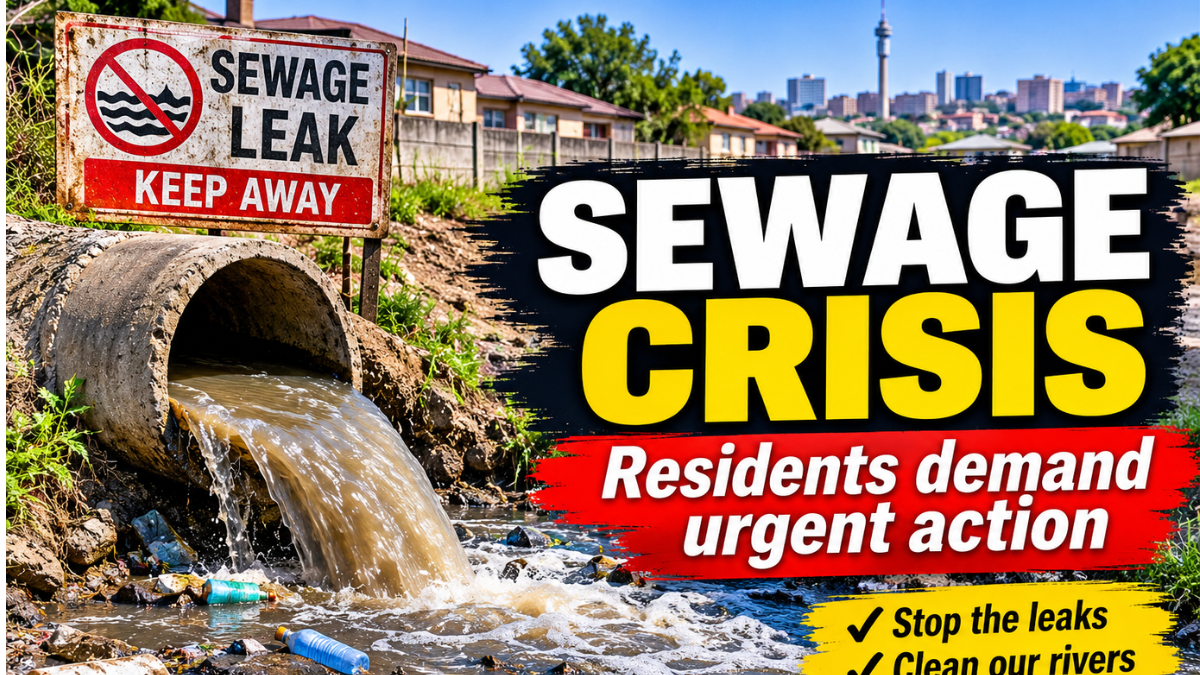
Residents Face Growing Frustration Over Sewage Leaks and Pollution
Residents in several parts of South Africa are becoming increasingly frustrated by recurring sewage leaks, overflowing drains and polluted rivers, as failing municipal infrastructure continues to affect communities and the environment.
From Tshwane and Johannesburg to Cape Town and parts of the Eastern Cape, sewage-related complaints have raised questions about municipal maintenance, wastewater treatment and the ability of local authorities to protect public health.
For affected households, the problem goes beyond unpleasant smells. Raw sewage flowing through residential streets, entering rivers or collecting near homes creates serious environmental concerns and exposes communities to potentially harmful bacteria.
Sewage Problems Continue to Affect Communities
In Langa, Cape Town, residents encountered pools of raw sewage near the Johnson Ngwevela voting station during the 4 November 2026 local government elections.
A burst sewer pipe caused wastewater to spill across the entrance area, forcing voters to navigate the contaminated surroundings. Residents reportedly said sewer blockages and pipe failures had become recurring problems in the area.
The incident highlighted how deteriorating infrastructure can affect everyday activities, including access to public facilities.
Similar concerns have been raised in Tshwane. In October, complaints emerged about raw sewage overflowing into a wetland near a residential area and a creche in The Orchards. The pollution was reportedly accompanied by unpleasant smells and concerns about possible health risks to children and nearby households.
These incidents reflect a wider problem facing municipalities that struggle to maintain ageing sewer networks and wastewater treatment facilities.
Wastewater Infrastructure Under Pressure
South Africa’s wastewater infrastructure has come under increasing scrutiny following the release of the 2025 Green Drop assessment.
According to figures reported by Business Day in October 2026, 396 of the 848 wastewater treatment systems assessed were classified as being in a critical condition.
The Department of Water and Sanitation also reported that pollution-related cases involving water services authorities had increased to 107. At the time of the report, only 70% of the required corrective action plans had been received.
These findings point to significant weaknesses in wastewater management, infrastructure maintenance and municipal accountability.
The consequences are not limited to residential neighbourhoods. Poorly treated wastewater can contaminate rivers, dams, wetlands and coastal environments, affecting wildlife, recreational activities and communities that depend on these water sources.
Rivers and Coastal Areas Face Pollution Risks
Sewage pollution is also affecting important natural water systems.
In the Eastern Cape, the South African Human Rights Commission investigated wastewater infrastructure failures and contamination concerns involving selected areas of Kouga, Nelson Mandela Bay and Buffalo City municipalities.
The investigation followed complaints about sewage spills, failing treatment infrastructure and possible contamination of rivers, estuaries and coastal waters.
The Commission used independent laboratory sampling and considered municipal monitoring information as part of its investigation. Its findings underline the importance of proper wastewater treatment and regular environmental monitoring.
In Cape Town, Milnerton Lagoon has also remained a concern. A report published on 8 November 2026 highlighted questions about a proposed R15-million plan to address pollution. Although some water-quality indicators have reportedly improved, concerns remain about the sources of contamination, including poorly treated wastewater from the Potsdam treatment works.
Residents Demand Accountability From Municipalities
Communities affected by sewage leaks increasingly want more than temporary repairs.
Residents want municipalities to identify the causes of recurring blockages, replace damaged pipes and maintain wastewater treatment facilities before failures become major environmental problems.
In many areas, residents report that sewage problems return even after municipal teams have visited to clear blockages or clean affected streets.
This has contributed to frustration among households that pay municipal rates and service charges but continue experiencing poor sanitation conditions.
Municipal authorities also face challenges involving ageing infrastructure, limited maintenance budgets, vandalism, illegal connections and increasing pressure on existing sewer networks.
However, these challenges do not remove the responsibility of municipalities to protect communities and respond to reported environmental hazards.
What Residents Can Do When Sewage Leaks Occur
Residents experiencing sewage leaks should report the problem to their municipal water or sanitation department and request a reference number.
They should avoid direct contact with raw sewage, keep children and pets away from contaminated areas and avoid using water from visibly polluted streams or rivers.
Where sewage is entering waterways or remains unresolved despite repeated complaints, residents can escalate the matter to the relevant environmental authorities or the South African Human Rights Commission.
Photographs, dates, complaint reference numbers and written communication can help residents document the problem and support further investigations.
Final Thoughts
Recurring sewage leaks and pollution have become a serious service delivery and environmental concern in South Africa.
The incidents reported in communities such as Langa and The Orchards, together with the poor condition of many wastewater treatment systems, demonstrate the need for stronger municipal management.
Residents need functioning sewer networks, properly maintained treatment plants and authorities that respond quickly when problems are reported.
Ultimately, access to safe sanitation is essential for public health, environmental protection and human dignity. Municipalities must turn their commitments into visible improvements before more communities are forced to live with the consequences of failing infrastructure.