
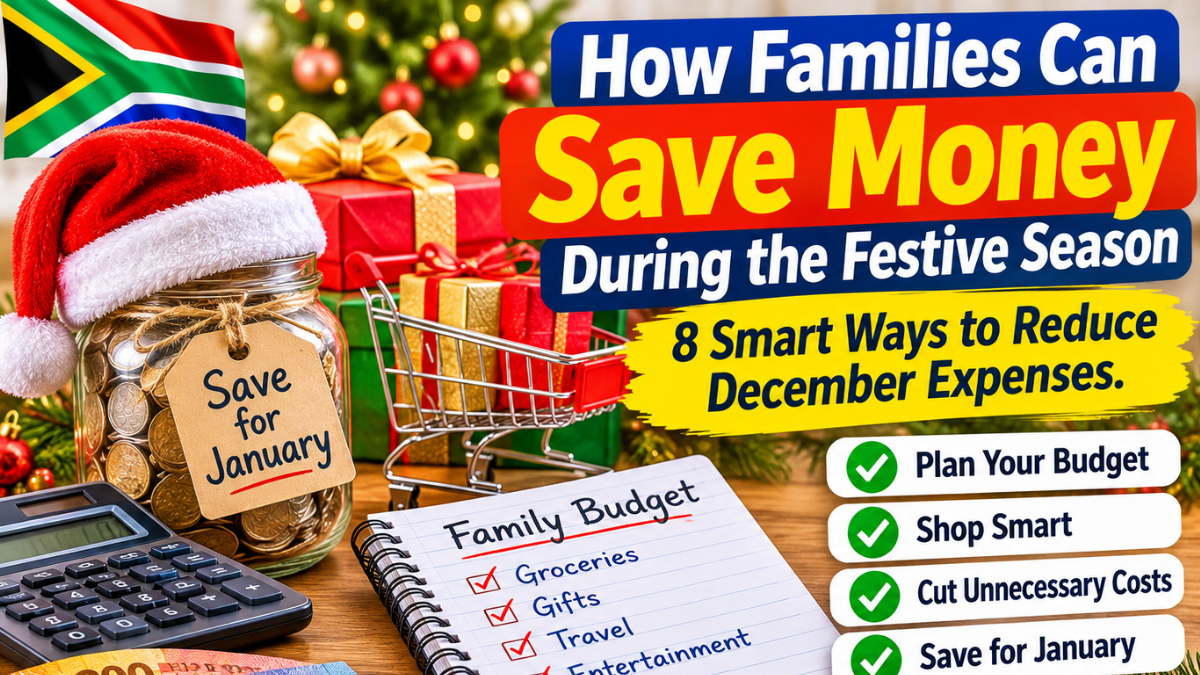
How Families Can Save Money During the Festive Season in South Africa
The festive season is one of the busiest and most expensive times of the year for many South African families. December brings Christmas celebrations, family gatherings, holiday travelling, shopping and entertainment. While these activities create wonderful memories, they can also put considerable pressure on household finances.
For families already dealing with rising food prices, electricity costs, transport expenses and monthly debt repayments, spending too much during December can create financial difficulties in January.
Many households make the mistake of using their entire December salary or bonus on celebrations without considering the expenses waiting for them when the new year begins.
The good news is that families do not need to spend large amounts of money to enjoy the festive season. With proper planning and a few practical changes, it is possible to celebrate while keeping household expenses under control.
Here are eight practical ways South African families can save money during the festive season.
1. Create a Realistic Festive Season Budget
The first step towards saving money is knowing exactly how much you can afford to spend.
Before purchasing Christmas gifts, groceries or holiday clothing, calculate your available income and list your expected festive-season expenses.
Your budget should include groceries, transport, gifts, entertainment, electricity and any planned family activities.
Remember to reserve money for essential January expenses such as school supplies, transport, rent, insurance and monthly debt repayments.
Avoid spending money that has already been allocated to important household responsibilities.
A realistic budget will help you enjoy December without starting January under unnecessary financial pressure.
2. Plan Your Christmas Shopping in Advance
Last-minute shopping can become expensive because shoppers often purchase items without comparing prices.
Families can save money by preparing shopping lists several weeks before Christmas.
Identify the items you genuinely need and compare prices at different supermarkets and retail stores.
Look out for promotions, loyalty programmes and special offers, but avoid purchasing unnecessary products simply because they are discounted.
Another useful strategy is to establish spending limits for Christmas gifts.
Instead of buying expensive presents for everyone, families can organise a gift exchange where each person buys one present within an agreed budget.
This approach allows everyone to participate without placing unnecessary pressure on household finances.
3. Reduce the Cost of Festive Season Groceries
Food is one of the biggest expenses during December celebrations.
Many families spend more than necessary because they purchase excessive amounts of meat, snacks, drinks and other festive-season groceries.
One way to reduce these costs is to plan meals before visiting the supermarket.
Prepare a menu for Christmas lunch and other family gatherings, then purchase ingredients according to the number of people attending.
Consider preparing affordable meals using locally available ingredients rather than relying entirely on expensive products.
Families can also organise shared meals where relatives contribute different dishes.
For example, one household can prepare the main meal while other family members bring salads, desserts or drinks.
Sharing the responsibility makes celebrations more affordable for everyone.
4. Avoid Unnecessary Holiday Travel Expenses
Travelling during December can become expensive because of increased fuel consumption, accommodation costs and additional transport expenses.
Families planning to travel should calculate their expected expenses before leaving home.
If you are driving, check your vehicle’s tyres, brakes and general condition before starting a long journey. Preventative maintenance can help reduce the risk of unexpected repair costs.
Compare accommodation prices and consider staying with relatives where appropriate.
You can also save money by travelling outside the busiest periods, where your schedule allows.
For families who do not have enough money for expensive holidays, local activities and day trips can provide enjoyable alternatives.
A memorable festive season does not necessarily require travelling long distances.
5. Be Careful When Using Credit Cards and Buy Now, Pay Later Services
The festive season creates many opportunities to spend money using credit.
Retailers frequently advertise special offers that encourage consumers to purchase expensive products through instalments or credit facilities.
Although these options may make purchases appear affordable, they can create additional financial obligations that continue long after December.
Before using credit, consider whether you can comfortably afford the repayments.
Remember that interest, administration fees and missed-payment penalties can increase the total cost of purchases.
Avoid borrowing money simply to maintain an expensive festive-season lifestyle.
If you cannot afford an item without taking on unnecessary debt, consider postponing the purchase.
6. Choose Affordable Family Entertainment
Keeping children and other family members entertained during December does not have to involve expensive outings.
South Africa offers several affordable recreational activities that families can enjoy together.
Depending on your location, consider visiting public parks, beaches, community events and free holiday activities.
Families can also organise activities at home, including outdoor games, movie evenings, cooking competitions and family picnics.
Instead of spending money at restaurants every weekend, prepare meals at home and enjoy time together.
These activities can create meaningful memories without placing additional pressure on your budget.
7. Set Limits on Electricity and Water Usage
Household utility expenses can increase during the festive season, particularly when more family members are spending time at home.
Cooking, refrigeration, entertainment devices and additional laundry can contribute to higher electricity consumption.
Families can reduce these costs by switching off unused appliances, using energy-efficient lighting and avoiding unnecessary electricity usage.
When preparing meals, consider using appliances efficiently and cooking several dishes together where practical.
Water consumption should also be monitored, particularly in areas experiencing water shortages.
Small changes in household habits can help reduce monthly utility expenses.
8. Start Saving for January Before December Arrives
One of the biggest financial challenges facing South African families is managing January expenses after the festive season.
Many households receive their December salaries earlier than usual, which can create the impression that they have extra money available.
However, January still brings important expenses, including school uniforms, stationery, transport, groceries and other household responsibilities.
A practical approach is to set aside a portion of your December income specifically for January.
If you receive a festive bonus, avoid treating the entire amount as spending money.
Use part of it to cover essential expenses, reduce debt or build emergency savings.
Preparing for January before the festive season begins can help families avoid borrowing money when the new year arrives.
Why Financial Planning Matters During the Festive Season
Saving money during December is not about preventing families from enjoying themselves.
It is about making responsible financial decisions that protect household stability.
Families who plan their spending are less likely to experience unnecessary financial stress after the holidays.
Good financial habits also help children understand the importance of budgeting, saving and distinguishing between essential purchases and unnecessary spending.
Most importantly, families should remember that expensive gifts, elaborate meals and costly holidays are not the only ways to celebrate.
Final Thoughts
The festive season should be a time for relaxation, happiness and spending quality time with loved ones.
However, poor financial decisions during December can create difficulties that continue well into the new year.
By preparing a budget, planning grocery shopping, reducing travel expenses and saving for January, South African families can enjoy the holidays without exhausting their finances.
The best festive-season gift you can give your household is the financial security of starting the new year without unnecessary debt and financial pressure.