
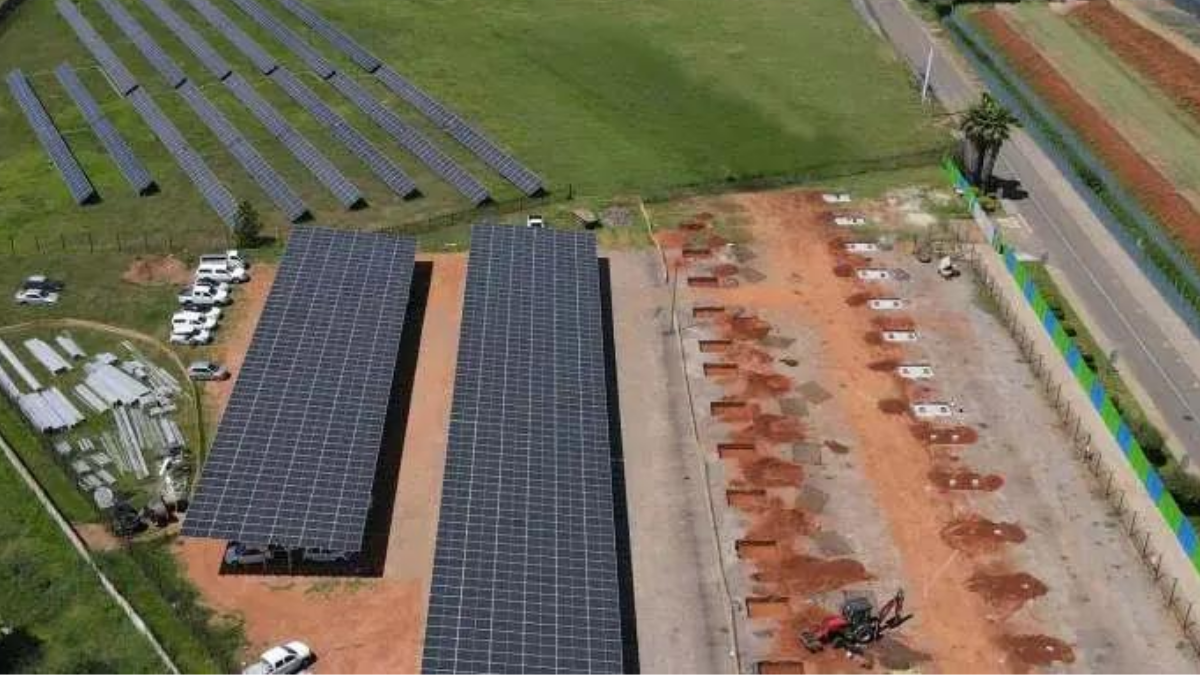
Mpumalanga Launches Major 6.35MW Solar Project as South Africa Expands Clean Energy
Mpumalanga solar project Shumbasolve Phase 2 launches with 6.35MW capacity, battery storage and plans for a much larger renewable energy development.
South Africa’s renewable energy sector has received another boost following the official launch of a 6.35-megawatt solar power project at Highveld Industrial Park in eMalahleni, Mpumalanga. The Shumbasolve Phase 2 development is designed to supply clean electricity to industrial operations at the park while improving energy security and reducing reliance on conventional electricity sources.
The project was officially launched on 28 October 2026 by Shumbasolve, a partnership involving Moolman Group’s energy platform MPower Energy, Highveld Industrial Park and Fledge Capital. The announcement was reported by Engineering News on 30 October.
The development is particularly significant because Mpumalanga has historically been associated with South Africa’s coal industry and electricity generation. The new solar installation demonstrates how industrial businesses in the province are increasingly exploring alternative energy sources.
Inside the new 6.35MW solar development
The Shumbasolve Phase 2 project is a fixed, ground-mounted solar photovoltaic installation with a generation capacity of 6.35MW. According to the project information, the facility is expected to produce approximately 9.98 gigawatt-hours of clean electricity annually.
It also incorporates a 4.48MWh Huawei battery energy storage system. Battery storage allows electricity generated during periods of strong sunlight to be stored and used when solar generation decreases. This is particularly useful for industrial facilities, where electricity requirements may continue beyond daylight hours.
The project is expected to help Highveld Industrial Park strengthen its energy security while supporting more efficient electricity management across its operations. Its expected environmental benefit is also significant, with Phase 2 projected to avoid approximately 6,000 tonnes of carbon dioxide emissions annually.
Building on the first phase
The latest development is not the first renewable energy project at Highveld Industrial Park. Shumbasolve Phase 1 involved a separate 3.6MW solar photovoltaic installation and a 1MVA gas-to-power generation unit. The first solar plant was commissioned in 2024 and includes approximately 6,200 bifacial solar modules. It is estimated to generate around 6.8GWh of clean electricity annually.
With both solar phases in place, the project has expanded the park’s ability to generate electricity from renewable sources. MPower CEO and Moolman private equity director JZ Moolman said during the October launch that the two phases combined were expected to avoid approximately 13,000 tonnes of carbon dioxide emissions each year. The combined development illustrates how businesses can gradually expand their energy infrastructure rather than depending on a single project.
More battery storage planned for the facility
Battery storage is becoming an increasingly important part of South Africa’s renewable energy developments. Solar panels generate electricity during daylight hours, but businesses do not necessarily consume all their electricity at the same time it is produced. Energy storage can help bridge this gap by keeping electricity available for later use.
During the launch, Moolman indicated that Shumbasolve intended to add approximately 15MWh of additional battery storage capacity during 2027. The proposed expansion would increase the site’s ability to store electricity and manage its energy requirements.
For industrial businesses, this can support more predictable electricity usage and reduce exposure to periods when grid electricity is more expensive. However, the financial benefits depend on installation costs, operating requirements, electricity tariffs and how the stored energy is used.
An even bigger solar development is planned
The ambitions for renewable energy at Highveld Industrial Park extend beyond the current Shumbasolve project. Moolman also revealed that MPower, working with SolarAfrica, had secured a 300-hectare site at the industrial park for a proposed 184MW solar photovoltaic development. The larger project is also expected to include approximately 210MWh of battery energy storage. If developed as planned, it would represent a substantial expansion of renewable energy generation in the area.
The proposed facility could strengthen the park’s position as an industrial location with access to large-scale renewable electricity. It is important to distinguish this planned development from the recently launched 6.35MW installation. The 184MW project is a future development and should not be described as already operational. Further construction and implementation details will be important as the proposal progresses.
Why Mpumalanga’s energy transition matters
Mpumalanga plays a central role in South Africa’s electricity and mining industries. The province is home to major coal-producing areas and several power stations that have historically supplied electricity to the national grid. As South Africa works to diversify its energy mix, renewable energy developments in the province are becoming increasingly important.
Solar projects can provide businesses with additional electricity-generation options while helping them manage operational costs and environmental responsibilities. Industrial facilities are particularly important because they consume substantial amounts of electricity. Projects located close to these operations can support more direct access to locally generated power.
The Shumbasolve development is an example of how private-sector partnerships can contribute to this transition. It also demonstrates the role of investment companies, energy developers and industrial property owners in developing infrastructure that supports business operations.
What the project means for South African businesses
Reliable electricity remains an important consideration for businesses operating in South Africa. Manufacturers, warehouses and industrial facilities depend on electricity to operate machinery, maintain production schedules and support essential services.
Developments such as Shumbasolve can help businesses diversify their electricity supply and improve their ability to manage energy requirements. The addition of battery storage also highlights a shift towards combining electricity generation with energy management rather than simply installing solar panels.
Nevertheless, renewable energy projects require substantial investment, technical planning and suitable infrastructure. Their long-term success depends on reliable equipment, effective maintenance, suitable financing and the ability to integrate generated electricity into existing operations.
For South Africa, the launch of Shumbasolve Phase 2 represents another step in expanding renewable energy capacity. With additional battery storage planned and a much larger solar development being considered, Highveld Industrial Park could become an important example of how industrial areas can participate in the country’s changing energy landscape.