
HOW RISING TRANSPORT COSTS AFFECT FOOD PRICES IN SOUTH AFRICA
Rising transport costs are putting additional pressure on South African businesses and households, raising concerns about the future cost of groceries as fuel prices increase and the expense of moving goods continues to climb.
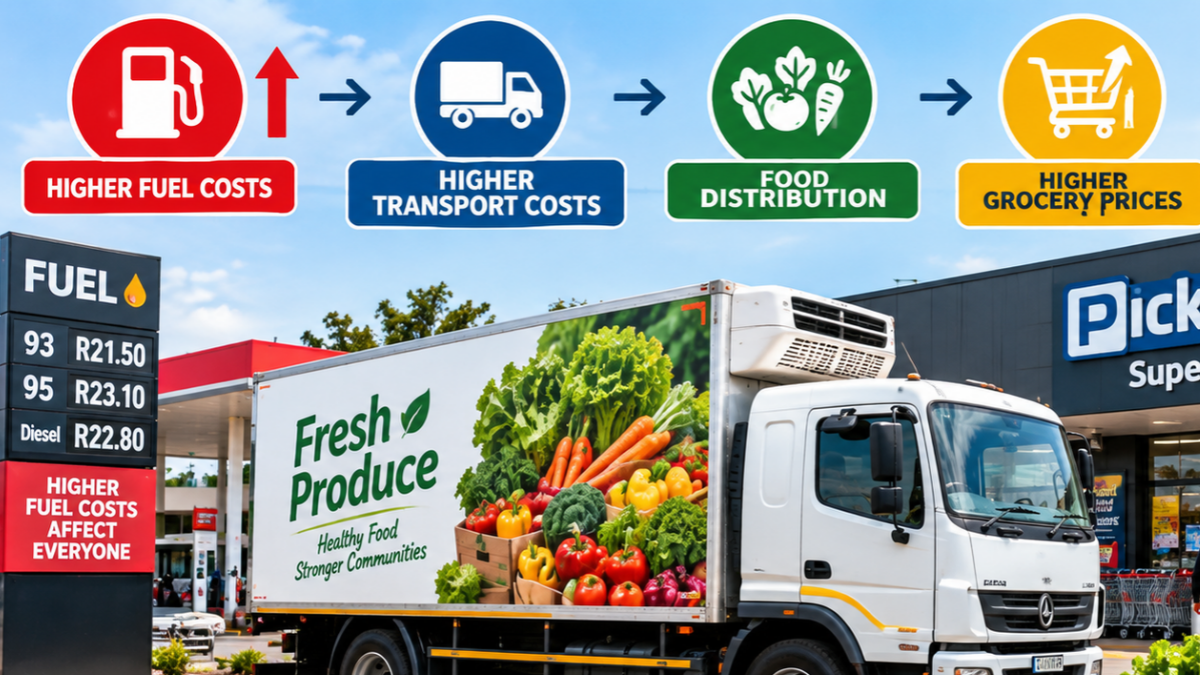
Transport plays a critical role in the country’s food supply chain, connecting farms, food-processing facilities, warehouses, distribution centres and supermarkets. When the cost of transporting goods increases, businesses face additional expenses that can eventually affect the prices consumers pay for everyday essentials.
According to Statistics South Africa, annual transport inflation reached 10.8% in September 2026, while food and non-alcoholic beverage inflation increased to 1.2%. Fuel prices were a major contributor to rising transport costs, highlighting the financial pressure facing businesses and consumers.
WHY TRANSPORT COSTS MATTER FOR FOOD PRICES
South Africa relies heavily on road transport to move food from producers to consumers. Trucks carry agricultural products, packaged foods, meat, dairy products, vegetables and other essential goods across the country.
When diesel prices rise, transport companies spend more money refuelling their vehicles. They may also face higher maintenance, insurance and operating expenses, particularly when delivering goods over long distances.
These additional expenses can affect the entire supply chain.
For example, a farmer transporting fresh produce to a wholesale market may face higher delivery costs. A food manufacturer may pay more to distribute finished products to retailers, while supermarkets may spend more moving stock between distribution centres and individual stores.
Businesses must decide whether to absorb these additional expenses, improve their operational efficiency or pass some of the increases on to customers.
The University of Pretoria has also highlighted how fuel, storage, infrastructure problems and supply-chain inefficiencies can contribute to rising food costs in South Africa.
HOW HIGHER FUEL PRICES AFFECT GROCERY SHOPPING
Fuel prices can influence food prices in several ways.
1. Higher delivery costs
Transport companies often depend on diesel-powered trucks to deliver food. When diesel becomes more expensive, the cost of moving products from suppliers to retailers can increase.
Businesses may respond by adjusting delivery charges or negotiating higher prices with suppliers.
2. More expensive fresh produce
Fresh produce frequently travels from farms to markets, warehouses and supermarkets before reaching consumers.
Products such as tomatoes, potatoes, onions and leafy vegetables may travel considerable distances before being sold. Higher transport expenses can place additional pressure on suppliers, particularly those operating with limited profit margins.
Fresh food also requires careful handling and timely delivery. Delays can increase the risk of spoilage, creating additional losses that businesses may need to manage.
3. Rising prices for packaged food
Transport costs do not affect only fresh produce. Packaged products such as bread, cooking oil, breakfast cereals and canned foods also move through several stages of production and distribution.
Raw materials must reach factories, finished products must be delivered to warehouses, and retailers must transport stock to their stores.
Higher fuel costs can therefore affect several stages of the process, adding pressure to the final selling price.
4. Increased supermarket operating expenses
Supermarkets must manage deliveries, distribution centres, refrigeration, storage and stock replenishment.
Although fuel is only one part of these expenses, sustained increases can make it more expensive to maintain reliable supplies.
Retailers may attempt to control costs through better delivery planning, efficient vehicle use and improved stock management. However, the extent to which these measures offset higher expenses varies between businesses.
WILL FOOD PRICES INCREASE FURTHER?
Rising transport costs create an additional risk for food prices, but they do not automatically mean that every grocery item will become more expensive.
The final effect depends on several factors, including agricultural production costs, harvest conditions, competition between retailers, consumer demand, exchange rates and the prices businesses pay their suppliers.
Companies may absorb some increases to remain competitive. Others may gradually adjust their prices if higher operating expenses persist.
There can also be a delay between an increase in fuel prices and its effect on supermarket shelves. Businesses may have existing contracts, stored inventory or previously negotiated delivery rates that temporarily limit the impact.
However, if transport costs remain elevated for an extended period, the pressure on suppliers and retailers may become more difficult to absorb.
Statistics South Africa’s September 2026 figures illustrate this distinction: transport inflation was considerably higher than food inflation at that point. This means higher transport costs had not translated into an equivalent increase across the food category.
HOW RISING TRANSPORT COSTS AFFECT LOW-INCOME HOUSEHOLDS
Low-income households are particularly vulnerable to increases in essential living expenses because a large share of their available income may already be committed to food, transport, electricity and housing.
When grocery prices rise, families may have less money available for other necessities, including school supplies, healthcare and household bills.
Some households may respond by buying cheaper alternatives, reducing the amount of meat they consume or changing their shopping habits.
Others may travel to different shops in search of lower prices. However, doing so can create additional transport expenses, particularly for people who rely on taxis or buses.
This creates a difficult situation in which households face pressure from both the cost of travelling and the cost of purchasing food.
For families already struggling to manage their monthly budgets, even modest increases in essential expenses can make it harder to maintain a balanced diet.
WHAT CAN BUSINESSES DO TO CONTROL TRANSPORT COSTS?
Food producers, distributors and retailers can take several steps to reduce unnecessary transport expenses.
These include planning delivery routes more efficiently, combining shipments where practical, maintaining vehicles properly and improving coordination between suppliers and distribution centres.
Businesses can also strengthen inventory management to reduce emergency deliveries and avoid unnecessary stock movements.
Reducing food waste is another important consideration. Products that spoil during storage or transport represent a loss of the resources used to produce and distribute them.
While these measures cannot eliminate the effect of higher fuel prices, they can help businesses manage costs more effectively.
WHAT SHOULD SOUTH AFRICAN CONSUMERS EXPECT?
Consumers should monitor grocery prices and compare the cost of essential products across retailers rather than assuming that all shops will respond to higher transport expenses in the same way.
Planning meals, preparing shopping lists and limiting food waste can also help households make better use of their available budgets.
However, individual budgeting cannot solve the wider economic pressures created by rising fuel prices, inefficient logistics or higher production expenses.
Long-term improvements in transport infrastructure, supply-chain efficiency and agricultural distribution could help reduce some of the costs associated with moving food across the country.
CONCLUSION
Rising transport costs are an important factor to watch as South Africa manages pressure on household budgets and business expenses.
Higher fuel prices can increase the cost of delivering fresh produce, packaged foods and other essential products. If these expenses remain elevated, some of the additional costs may eventually reach consumers through higher grocery prices.
Nevertheless, transport costs are only one part of the food-price equation. Agricultural conditions, competition, production expenses and consumer demand also influence what shoppers pay.
For South African households, the key concern is whether essential food prices will remain affordable as businesses continue managing higher operating costs.